Episode Transcript
Mahesh Krishnan [00:00:00]:
We did the math on it, we redid the numbers, and we did the modelling, and we found out that you don't need 20 million qubits. You could crack this with just 10,000 qubits.
VO [00:00:10]:
From KBI Media, I'm Karissa Breen, and this is KBKast.
KB [00:00:19]:
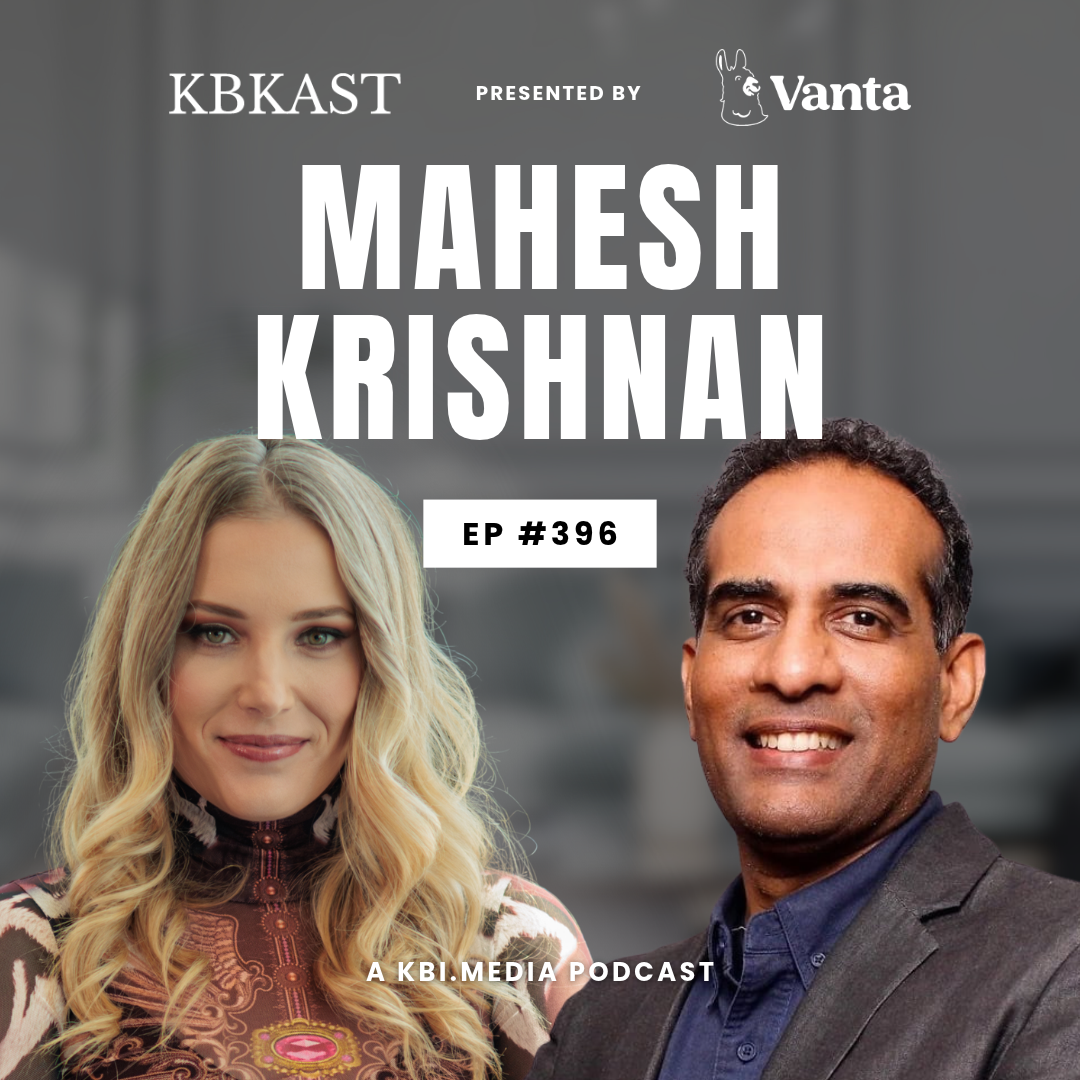
My guest today is Mahesh Krishnan, Chief Technology Officer for Fujitsu in Oceania. His team has done the maths on how much quantum power it would really take to break the encryption we use today. And the answer is a lot less than people thought. We get into Harvest Now, Decrypt Later, and why it makes quantum today's problem. We also talk about why Australian businesses say they're worried but aren't acting, and what happens to anyone still unprepared when Q-Day comes.
VO:
If today's episode lands for you, do 2 things: hit follow and send it to one person in your network who needs to hear it. That's how shows like this grow.
KB [00:00:54]:
Alrighty, let's get into it. Okay, so Mahesh, I really want to start with understanding Are boards making a mistake by treating quantum risk as a future problem when sensitive data may already be getting harvested today? I think that's a great place to start.
Mahesh Krishnan [00:01:12]:
Well, first, thanks for having me, uh, in the podcast, Karissa. Really looking forward to this conversation. So, I wanna start by, uh, talking about something that may surprise some of your listeners. I wanna start by talking about RSA encryption. Now, this is the thing that's quietly been sitting behind protocols like HTTPS and TLS, and quietly protecting almost every website, every bank login, every digital signature that we've ever been using. And this technology has stood the test of time. It's been around for 50 years. 1977 is, is actually when this technology was first introduced.
Mahesh Krishnan [00:01:45]:
And the reason that it's held remarkably well is because with the computers that we have today, breaking this would take billions of years. So, billion with a capital B, right? But then comes along a scientist by the name of Peter Shor in 1994, and he comes up with this algorithm that could break RSA. But there are 2 things. First, it had to be run on a new class of new type of computers called quantum computers. And second, there were no quantum computers around. So when quantum computers first came about, they did the math on this, right? And they discovered that it would take about they would take a really, need a really powerful quantum computer to break cryptography. So we are talking about 20 million qubits, right? And so we thought, well, this is safe. You know, we're decades away from this problem.
Mahesh Krishnan [00:02:34]:
It's not a problem at all. But, you know, as things happen, technology moves on. And 2 years ago, Fujitsu, we built quantum computers. So we are in the process of building a 10,000-qubit quantum computer. And we also have a quantum simulator. Basically, it simulates what quantum computer would really do. And we did the math on it. We redid the numbers and we did the modelling and we found out that you don't need 20 million qubits.
Mahesh Krishnan [00:02:58]:
You could crack this with just 10,000 qubits, right? It's still, I mean, you needed to run the quantum computer. You need to run the algorithm. You need to run Shor's algorithm for about 100 hours and you needed about 2.3 trillion gates and everything else. But the real thing was that it's not decades away before this can be broken. Yeah. It is just years away. And that is the fundamental problem, right? The second thing is that people can right now tap into the data that's flowing through, look at the information. So harvest all the information that is flowing through, store the data, and then wait for quantum computers to come about and then decrypt it.
Mahesh Krishnan [00:03:35]:
So we call this harvest now, decrypt later. And that is a real problem. So as you mentioned, right, just coming back to your question again, right? The problem is quantum computers won't be able to crack cryptography now. It's a future problem, but with harvest now, decrypt later, people can actually store the information and wait patiently for, for it to be broken a few years from now. Now, this is not all doom and gloom, right? I mean, like Fujitsu does a lot of consulting, like I work with a lot of customers and everything else. There is something called post-quantum cryptography, or PQC as we call it. And so we work with our customers to see how they can transition a lot of the asymmetric cryptography algorithms that are the ones that are susceptible to this, to Shor's algorithm. We work with them to see how they can actually transition across.
Mahesh Krishnan [00:04:21]:
So it's not all bad news, right? So you can actually transition it, but we need to be aware of the fact that the current encryption, the asymmetric encryption in the internet, can potentially be broken. Yes, it is a bit of a future problem. But the threat is there today.
KB [00:04:36]:
And it's interesting because now what's happening in like the media and people that I've, I've spoken to a few people like yourself about quantum, not as many as I have about AI and cybersecurity, so to speak. But do you think people at the moment, their attention is very absorbed by the AI stuff? And now it's like people are saying, well, we've got to focus on quantum and all this sort of stuff that we're going to get into today. Talk me through that because it's like people can't even get their head around the first thing before already onto the next wave of stuff. So with the customers and the people that you're speaking to in your market, what, what's going on there? Because people are already overwhelmed by even doing basic, like, you know, patch management stuff. And now we've got all the likes of everything else that's happening in the market. It's just more, I'm keen to understand how are people approaching this in terms of a headspace? and like allocating time and resources to look at this?
Mahesh Krishnan [00:05:34]:
It's a great question, right? We talk to a lot of people. Our cyber team talks to a lot of people, and leaders are generally facing 2 disruptions at once, right? AI is the thing that is literally in their face right now. For you to actually— we ran a global survey earlier this year. We asked the question, what are the external factors that you're really concerned about that may affect your business? So we asked— we asked 1,000 people, C-level leaders. What came across in that overwhelmingly across the world is that the number one threat they actually see is cybersecurity threats. And the key thing here is that the cybersecurity threats are being accelerated by AI. If you look at frontier models and everything else, you can use those frontier models to find vulnerabilities and exploit them at machine speed. This wasn't the case before.
Mahesh Krishnan [00:06:19]:
So it would take you, you find a vulnerability, it may take you a long time to exploit it. But now it's happening at machine speed. But the good news is that AI is also the solution to this problem. So people are also using AI to fight the threat that's caused by AI. If I look at it, it's 2 different things. Like AI presents a very definite threat to cyber, right? At the same time, it is also a solution. But quantum, on the other hand, is a completely different problem. It has the ability to break encryption cryptography on the internet.
Mahesh Krishnan [00:06:52]:
And that is something that we need to work on. So if I were the boards or if I were looking at companies, I would invest in both. AI is the immediate thing in front of us and we need to deal with it. But because of things like harvest now, decrypt later, you need to start investing in how you solve those problems caused by quantum computers. Here is the thing that I would actually also mention is that you don't really need a quantum computer to solve the issues. Post-quantum cryptography doesn't need a quantum computer. I think that is one of the things that we need to realize. So we already have algorithms that can work today.
Mahesh Krishnan [00:07:26]:
We can start to transition that across.
KB [00:07:28]:
Okay, this is interesting. So how do people start doing that now? So even if they're listening to this, or perhaps their board said, all right, you've gotta go and investigate what this looks like, where do people start to approach this problem, especially if they're dealing with a big enterprise?
Mahesh Krishnan [00:07:44]:
Yeah. What people need to realize, right, is that potentially some of the data is already being stolen, right? It's already out there. The way I like to frame it to companies and boards is think of it as someone stealing a locked filing cabinet out in your office today, right? They can't open it right now. They don't have the key. But in a few years' time, they're hoping that they will get the keys to it to unlock it and look at everything that's there. So what our cyber team recommends is a 3-pronged approach. We talk about upgrade, mitigate, and govern. So, if you look at upgrade to start with, this is like changing the locks.
Mahesh Krishnan [00:08:17]:
You know the locks are broken, right? So, you go ahead and you need to change that. This is around applying PQC or post-quantum cryptography. So, you wanna migrate all the algorithms that you are using right now in your company that are prone to this kind of attack, and you migrate it to quantum-resistant algorithms. And just as importantly, you also need to build what we actually call as crypto agility. It's not enough if you change all the locks now and say, well, this is gone, right? But what if the lock gets broken again? So you need to be able to transition again to another cryptography if this problem comes again. And that shouldn't be a multi-year project, right? This is what we talk about crypto agility, being able to change that again, change those locks again. The second one I mentioned is mitigate, right? Now, this is about facing up to the fact that your data might already be sitting in someone else's filing cabinet. So you assume that the breach on the longest shelf-life data that you have, like, you know, things like your health records, your IP, anything that stays confidential for a very long time. And so you come up with a real strategy around the assumption rather than hoping that it isn't true.
Mahesh Krishnan [00:09:20]:
So, you know, organizations already have mitigation strategies. They talk about how they handle things like data breaches. So we need to come up with, in a similar fashion, we need to come up with a way in which to deal with this. when this actually occurs. And I also think like, you know, organizations can actually work with industry and regulators. They don't have to do this. No single organization needs to solve this problem alone, right? The third one is around governance. Now, this is the one that companies most often get wrong because they treat it more like a renovation you finish once.
Mahesh Krishnan [00:09:53]:
Now, changing the locks, going back to the same analogy, right? It's a one-time job, but you wouldn't stop there. You need to kind of like keep your house secure. You need to monitor, you put in a security alarm system and you constantly monitor it because the threat you're watching, right, doesn't stand still. So you need to put a governance around it. You need to have like a standing structure, like a named owner, continuous monitoring, because new research, new hardware, and new estimates, like they keep shifting the timeline. So the lock is the moment, right? The alarm system is what keeps you going. So to kind of like directly answer your question, like I would recommend this 3-step approach, right? You need to start treating it as a future problem, and that is a big mistake. But like I said, it's a fixable one.
Mahesh Krishnan [00:10:35]:
You can actually start working on this today.
KB [00:10:38]:
Do you think people are working on this today in your sort of what you're doing day to day? Or do you think it's like, yeah, we'll get to it when we get to it. And I know we're going to get into a few other, what that looks like in the future. But would you say that it is becoming high on these companies' list to address, or is it more like, I kind of know about the thing, but it's in my peripheral rather than right in front of me?
Mahesh Krishnan [00:11:03]:
What I see is that regulators are coming up with actual recommendations, right? You see NIST as an example. I mean, we'll start with the ASD, the Australian Signals Directorate. They've come up with a recommendation, right? They have an actual deadline, and they said that people need to start migrating to PQC. And they should have completed this by 2030, right? In fact, every organization should have a refined transition plan by the end of this year, 2026, right? And they've also said that migration of critical systems and long-lived sensitive data, that needs to be underway by the end of 2028. So, people have come up with recommendations. And you look at some of the larger companies, like hyperscalers, they're already moving over to fix this problem. Even if you go into your browser, as an example. Now, you can go in, let's say you go to a website, go to your favorite banking website.
Mahesh Krishnan [00:11:51]:
If you're using Chrome or Edge, you can hit F12 key on it and that brings up the developer tools. And you can go over to a security tab and see, you know, whether, what is the cryptography that you're using, right? And if it's got like ML-KEM in it, in the string, you can say, hey, look, it's already safe. It's safe from the harvest now, decrypt later problem. So companies are actively working on it, right? But you think about this, this is the front door. There are organizations that are helping you do this, but you may have internal systems that already use a lot of these things. And that's the thing that you need to be worried about. And I think there is a general lack of urgency in this. So Fujitsu did a survey earlier this year and we asked, you know, one of the questions that we actually asked was like, how do companies think this is real? And Australian companies, Australia and New Zealand came out and said like, they topped the list and said like 28% of them believe that this is a real threat for them.
Mahesh Krishnan [00:12:47]:
But then when we asked that, are you doing anything about it? I think Australia has ranked lowest in that, right? There's only 24% who are actually actively looking at doing something about it. So to your question, yes, there are some companies out there that are taking it very seriously and doing it, but then there's a whole bunch of others who are basically relying on, hey, look, the the internet and, you know, the companies that are working on it will fix the problem for them. And that is not true. So, we need to actively start working on it.
KB [00:13:15]:
And where do you believe that general lack of urgency really stems from? So, do you think, again, it's that nice to have, I kind of know about it, but I've got thousands of other things I need to do before I even get there?
Mahesh Krishnan [00:13:29]:
This is one of the fundamental problems, right? Is this is not something that they see happening. We talk about potentially people stealing your information, right? You may have your security operations center and your logs and everything else. And a lot of that is indicating to the current problem that they actually have. You know, if there's an attack that's happening, they can look at some of these attacks and they can act on it. But when someone is actually stealing this information quietly, silently behind and holding onto that information, you don't see it. It's not a tangible threat to a lot of these people. And that is a fundamental problem with this. Right.
Mahesh Krishnan [00:14:01]:
They're not seeing this thing happening. And so people are a little bit more complacent and they think, hey, look, it's a future problem. You know, quantum computing will, quantum computers will, you know, crack encryption in a few years' time. Quantum computers aren't ready yet. So it's fine. And that is the fundamental problem, right? They see this more as a future problem. It is a current day threat that they need to address. And that is the messaging that we need to get out to people and create that sense of urgency that this is really important.
KB [00:14:29]:
Okay, so there's a couple things in there. So what I'm hearing, it sounds like even when cybersecurity like 10 years ago was like, had that real sense of urgency about it and not many people knew, it's like, oh, it won't happen to me. Do you think the same sort of talk track is happening saying, oh well, that's ages away, I'll be dead before people can even encrypt any of this data? Do you think there's a bit of that mindset in there? People don't know how close they potentially are from what you're saying here, Mahesh?
Mahesh Krishnan [00:14:55]:
Correct. I think so. We talk about this as Q-Day. Q-Day is the day in which quantum computers will be able to crack cryptography. People also call it as Y2Q. We don't have a precise answer on exactly when that is gonna happen. We have some kind of indication, you know, we, we say it may happen somewhere. Some people say the estimate is around 2035, and some people say it could be as early as 2029, but we don't have an exact number.
Mahesh Krishnan [00:15:23]:
And that is kind of like part of the problem as well is like, you know, they say it's a future problem, as I said before. And so we will wait for this to happen. But if you look at the data that you're holding onto, right, the core of the problem is that you may have data that you're holding on and legislation mandates that needs to remain secure for a number of years. So if you look at things like the healthcare industry, for example, And you may have, you're holding onto patient information. The data needs to be held secure for 7 years after your patient relationship ends. And in some cases, you know, 30 years after someone has passed away. And a lot of this is governed by like the My Health Records Act. You think about that, right? So you are liable for a lot of those things, but people don't see that in front of them now, right? We already have data classification, for example, but we also had to add another dimension to it.
Mahesh Krishnan [00:16:16]:
is like how long we need to hold on to the data securely. And I think people have a lack of understanding of that at this point in time as well.
KB [00:16:23]:
You mentioned before people in Australia are a bit more complacent around this issue. And I know you operate in the Oceania market, but do you think like places in Europe or in the States, it's the same sort of complacency globally, or do you think it's just more prominent in Australia?
Mahesh Krishnan [00:16:42]:
It is a bit prominent in Australia. So if I looked at the numbers, the US, they are actively investing a lot more in it. The same with regions like UK compared to Australia. Like, I mean, the UK, for example, twice as likely to invest in a lot of these technologies at this point in time. So except for, you know, countries like, I was just looking at the statistics as we speak and except for countries like India where they don't see this big problem, even they are investing a lot more into it. Right? So, so I think fundamentally Australians are a little bit more complacent. That is what the numbers actually suggest at this point in time. But I feel that when we bring in that sense of urgency, Australians will quickly switch over to start prioritizing this over some of the other activities that they may have.
KB [00:17:24]:
What do you believe is going to give people that sense of urgency? So it's one thing to listen to this podcast and go, I'm going to take some action, but is it until the writing is on the wall, people's data start to get incredibly exposed, the Q-Day thing happens? What is it, do you think, that will be the catalyst perhaps that generates that urgency for these businesses to do something?
Mahesh Krishnan [00:17:47]:
Legislation would definitely help. I know ASD have created a, it's more a recommendation at this point in time, right? It is not an enforcement. And I think that will definitely help. I think ASD have clearly called it the threshold as well, right? They've clearly stated what people need to do and they've set up a timeline for this. So I think more education is what is gonna help. We cannot wait till the first breach happens before you start to act on it. It is just way too late to act at that point in time because there are so many things within your organization that would need to be changed. For example, if you have devices or you have cards that have a chip in that and that uses this technology, a lot of that would have to be changed and you cannot wait too long for that to happen.
VO:
We'll come back to that in just a moment after a quick word from our sponsor. If you're working in AI, machine learning, or data science, you're likely already handling sensitive information. Proving your security and compliance posture? That's where Vanta comes in. Vanta helps AI-driven teams fast-track compliance— think SOC 2, ISO 27001, GDPR— with minimal disruption to development. Visit vanta.com/KBKast, V-A-N-T-A.com/KBKast, to learn more.
KB [00:18:45]:
So then my next question would be, how much of an organization's data really needs to stay confidential for the next 5, 10, 20 years? And would you say leaders are asking that question? And I know we said it's driven by legislation and the conversations with you know, ASD and friends as being there. But do you really think that people are asking these questions internally, especially on a private enterprise, maybe on a government level? But what about if you're in the finance sector? Do you think people are really worried about this?
Mahesh Krishnan [00:19:45]:
The correct answer to that is that people aren't. They aren't asking the right questions. Look, fundamentally, I think it starts off being a data classification problem, right? Like every organization already has a version of this. You know, they have things like public, internal, confidential, right up to restricted and highly sensitive information, right? Most leaders think that by actually classifying this data, you know, the problem's solved. Like I mentioned, we need to add another time dimension to it. And defense and government, as you mentioned, right? Some of the data needs to be protected for a very long time because it has things like national— we are talking about national security, we're talking about defense capability, we're talking about critical infrastructure, and they are taking it very seriously. Right. And if you look at other organizations, enterprises, banking and financial is a very good example.
Mahesh Krishnan [00:20:29]:
Some of those legislations, you know, things covered by the Corporations Act and AUSTRAC's anti-money laundering obligations, they mandate certain things. And so they need to be really careful about this. We need to start to add, like I said, when we are doing the data classification, we also need to add this other dimension and start to think about, I have PII and I have information that needs to be protected. And I need to say how long it needs to be protected. And do it right. Now, here's the thing. So, legislation actually gives you a lot of answers already, I said, but what it doesn't cover is the other half of the equation. You may be obligated to hold onto the data for 7 years, but what happens if the data leak happens on the 8th year? That is when the reputation comes in, the other half of the equation.
Mahesh Krishnan [00:21:14]:
So, people need to think about, about that as well. So, if customer data leaks in 8 years, and it turns out it was protected by encryption we knew, everyone knew was becoming obsolete, then it's not a compliance conversation anymore, right? It becomes a trust conversation. And that is something that a lot of the enterprises and organizations, private organizations, need to understand.
KB [00:21:37]:
This is interesting. So you're saying there's predictions around a Q-Day in like 2035, which is like less than 10 years, which isn't that far away really. So now if we look at today's world and there's a data breach, look at what happens? People freak out, you know, people hate the company. There's all these issues, government's in there, there's penalties, there's class actions. But if a Q-Day happens and people don't have this protected, then everyone's sort of in a very precarious position. So do you just envision— there's definitely going to be some company out there that doesn't do this, let's be honest. Then just say this thing comes down the pike, what then happens to these businesses? Is that the end of the line for them? Like, because it's going to be very hard to be like, well, we told you for so long to do the thing. And now everything's being exposed, not just, oh, you know, it was X amount of customers.
KB [00:22:26]:
There's gonna be IP. There's, you know, all sorts of things in there as well outside of just customer data. What happens in that scenario on like a societal level in Australia?
Mahesh Krishnan [00:22:38]:
A lot of it starts with customer trust because it's the one every organization has. If encryption fails, and we're talking about decades of personal data, financial records, health information, Suddenly all of this is exposed and the trust once broken is generally one of the hardest things to rebuild. Look, customers don't evaluate on an apology. They evaluate whether they can still trust you with the next piece of information that you ask for. And often the answer is no, right? I mean, this is the thing that we need to look out for. So look, if I were to think about things like government and defense, the stakes are obviously, the stakes escalate. We are talking about classified documents, intelligence operations, diplomatic cables. A whole bunch of things, right? If that becomes exposed, it's just, it's just not embarrassing.
Mahesh Krishnan [00:23:23]:
It's a loss of control over critical infrastructure and genuinely compromised ability to protect our citizens, right? Loss of life and everything else. So I think governments would take this very seriously. And one, one thing that I'll actually say, right? I mean, this is a, but this is a big project and we say, hey, look, 10 years away. The reason that I say act now is because there's a lot of stuff that needs to be done. You look at, I'm sure you have a passport. I'm assuming you have an Australian passport or there are, you know, there are 140 countries in the world that have these e-passports and each and every one of those passports have an RFID chip. And guess what is the technology that is securing those chips? It's RSA and it's elliptic curve cryptography, ECC, right? Those are the ones that are going to be broken. So it makes it a lot more easier to forge passports as an example.
Mahesh Krishnan [00:24:09]:
So, so you think about it like every fact, little things here and there, all of those things need to be fixed in the long run. So it'll be a massive piece of work if we don't start to address these things now. And that is one thing that we need to be really concerned about. And even in enterprises, if you look at enterprises, there's a lot of IP that is, you know, your company relies on an IP that you created over a period of time. For a software company, it could be like source code that needs to be highly protected. For a pharmaceutical company, for example, they would have spent billions of dollars on research and building this drug. If that information about how that is leaked out, then potentially, you know, your competitor can, you know, undermine you. They undercut you.
Mahesh Krishnan [00:24:52]:
Your margins will be lost. And you can see companies going under because of this. And that is the danger that we need to be thinking about. So, the importance of it. One thing that I'll actually say, right? You look at it as if you look at enterprises, you look at government and customer trust and all these things, right? The way I look at it. They're all occupying different floors in a building, right? And the foundation is built on this cryptography, right? If the foundation is fundamentally not strong and it gets broken, then the whole building collapses, right? So that's the danger that we need to think about.
KB [00:25:26]:
So then do you envision that if people don't do this, it's going to equal out the playing field? So for example, not to get too much into geopolitics, but if China knows what US is doing, national security or Australia, That's not good. So I understand government's reasoning, but then private enterprises, and like you said, the pharmaceuticals, you know, they don't want to know how they made certain drugs and therefore, you know, another company steals their IP, et cetera. So do you think that these private enterprises, they're going to be very driven by their IP, or do you think they're going to be driven by the customer data? And I know that's a hard question to answer. We can say both, but at the end of the day, the IP is what generates the revenue for these businesses. So do you think that may be what sort of spurs them along to think about this a little bit more seriously?
Mahesh Krishnan [00:26:20]:
I think so. I mean, like if your share market, your share price is going to come crashing down because your IP is gone, that would be a really strong motivation factor for a lot of people. Yeah. Yes, customer trust is very important. You want to protect that information. But if you lose customers' trust and you lose customers, then that is again going to affect your bottom line. And so companies probably need to look in that angle, right? If your IP is gone, hey, look, you know, your share price is going to come crashing down. Your company can go under.
Mahesh Krishnan [00:26:47]:
If the trust is broken with your customers, again, that may start to affect your business. That is a real danger that these people need to consider. So, you know, on the one hand, you may say, hey, look, you know, these expensive drugs are not freely available for everyone to make. But then nobody's gonna be investing in that research to build it up because what if it gets stolen, right? So look, I am quite optimistic. I don't wanna sound like the sky is falling. I think there's a lot of positiveness in this. And I mean, I wanna kind of like end with a positive message in this is that governments, legislative bodies, and some of the large companies will not let this happen. But that is no reason for complacency.
Mahesh Krishnan [00:27:27]:
Individual companies still need to act on it and work on it. If this sounds overwhelming, I would say reach out to some of the experts in this field. I know Fujitsu Cyber, they actively advise a lot of people on how to get started. The 3-step program that I spoke about, assessing what the dangers are. In some cases, you may need to do nothing. You're not holding on to PII information, or you are relying on some of the hyperscalers, and that's where all their information is stored. And so you may look at it and go like, this is fine. I don't have anything.
Mahesh Krishnan [00:27:56]:
I don't have to do anything. And that's perfectly fine. But at least having that assessment done will give you peace of mind.
KB [00:28:02]:
And would you say quantum is one of those things where it's like a double-edged sword? So it can be used for good, but then bad, similar to what we see with AI, for example, it's good parts, also bad parts. So then on that note, what do you think sort of moving forward now? So I know that Like I said, I have spoken to a few people about this, not as much as I have about AI and cyber and all these sort of things, but from now onwards, and you said by 2030, this should be where people are at, which again, isn't that far away. What do you sort of sit back and think about at the end of the week on how this is going to go moving forward?
Mahesh Krishnan [00:28:38]:
Look, quantum computing is going to be great for society in general. There are some of the use cases for quantum computing. Things like new materials design, drug discovery, large-scale simulation, right? Those are the areas that it's going to contribute positively to society in general. Just like AI, the positiveness of these, the technology, the disruptive technologies that are coming our way, like AI and quantum, they're going to contribute positively to society as a whole. But again, the same technologies can be used for bad things. I mean, it wasn't designed to break cryptography. but it has the capability to build cryptography, right? I would focus more on the positiveness of things. Our purpose is to make the world more sustainable by building trust in society.
Mahesh Krishnan [00:29:21]:
It's a statement that we use. It's a purpose statement that we use. We strongly believe in it. We don't put this purpose statement just on PowerPoint slide decks and glossy brochures. We really have an office of purpose that actively drives it through the company, right? So we believe quantum computing will contribute positively to society. And so, you know, from a personal point of view, I'm really happy in the way that quantum computing is progressing and the way that we build, we're building it up. And look, I think one of the things that you mentioned is around quantum computing is still a few, I did mention this as well, and quantum computing is still a few years away from large-scale commercial use. And although people say 2035, some of this could have happened a lot quicker.
Mahesh Krishnan [00:30:03]:
We already have some technology today. So we call them quantum-inspired technology. So while quantum is still coming up, we have quantum-inspired technology. We build things like the Digital Annealer that solves a lot of the optimization problems that quantum computers are very good at solving. They can solve that today. So it's already starting to contribute in a positive way, in my opinion. So look, I'm quite bullish in terms of like the effects of quantum in general, but it also has negative uses, I suppose.
KB [00:30:32]:
So if there was a Q-Day, What does that day actually look like? Because what was coming to my mind to draw a parallel was like Y2K, when the year 2000 happened. I was substantially younger then, but I remember everyone thought the sky's gonna fall and all this stuff's gonna happen. Nothing happened, but nothing happened because of the global companies spent so much money to like ensure that nothing were to happen. Apparently there's all this theory. It just reminds me of when you're talking about Q-Day. That's what was bringing me back to that moment.
Mahesh Krishnan [00:31:08]:
Yeah. We also call this Y2Q, right? The day in which quantum computers are going to break, break cryptography. But I believe it is not going to be like this. Suddenly we wake up one day and we find, hey, look, you know, Q-Day is upon us or something like that, right? It is going to progressively happen. You will see that quantum computers are getting more and more powerful. we can track the trajectory on when it's going to happen. It's like I said, it's not going to, you know, you're going to wake up one January morning in 2035 or something and it's like, look, it's Q-Day. Like that's it.
Mahesh Krishnan [00:31:37]:
The whole internet is broken or anything. So it'll happen progressively and we will have an opportunity to fix it as we move along. And just like Y2K, I think we need to be alert. We don't have to be alarmed is what I would actually say. It is happening. And as you pointed out, we spent a lot of money for Y2K and then it was more like an, almost like an anticlimax. Nothing really happened. So just my optimism is that the same thing will happen, but it doesn't mean that we remain complacent.
Mahesh Krishnan [00:32:06]:
I think that is the key message that I want to get through. There needs to be a sense of urgency. We cannot be complacent, but the sky is not going to fall on Q-Day. We collectively won't let that happen.
KB [00:32:17]:
But what happens if it does happen? What does that look like then in your eyes? So what are we dealing with here? We got computers on fire, we got people losing their mind, governments are out of control. Like, what would happen though if, yes, some people will come to the table, but there's still going to be companies out there that don't participate, have no clue, didn't follow what they should have done? We've seen it already because now we've got more technology than ever, we have more breaches than ever. So there's definitely going to be a time when something doesn't go to plan, because it inevitably does. It's just more, what do you think, given your role, could happen?
Mahesh Krishnan [00:32:54]:
The first thing is that there are 2 problems over here, right? One is around some of the information that has already been stolen, the harvest now, decrypt later data, right? You may start to see some of that information coming through. But people who got the ability to store a lot of this information and harvest them later, It's like more like the state-level actors. It's not like the hacker sitting in a basement somewhere holding all those information. That's not going to happen, right? That's the first thing. The second thing is that when encryption is broken, it's not going to be chaos all around because you will have, like I mentioned earlier, some of the major players like the Googles and the Amazons and the Microsofts, right? The hyperscalers. Cloudflare. Cloudflare actually says that 65% of all the traffic now that goes through them is already safe. So you will see that the transition will happen over a few years and that if you are browsing the internet and you're going to a bank and things like that, you would still be okay.
Mahesh Krishnan [00:33:58]:
There'll be a fraction that will still be exposed. I go back to my passport explanation. It's not that your passport, your e-passport information is suddenly going to be stolen by someone sitting across the room. The governments will come through a program where as your passports expire, they all just got a 10-year validity period, most of them, they would renew it and the next set of passports will use the quantum-safe algorithms to encrypt them. So you will see a lot of that transitioning slowly. So I don't see that, you know, the whole, the world will collapse and the economy will collapse and things like that. But blockchain, for example, right? I mean, Bitcoin, they all rely on the same cryptography. And so digital economy relies on this.
Mahesh Krishnan [00:34:41]:
So if we don't fix it, yeah, you know, like all those problems will magnify manyfold, but everybody's aware of this and we will come to a solution on this, right?
KB [00:34:51]:
It'll be incremental though, from what I'm hearing, from what you're saying, it'll be incremental solution.
Mahesh Krishnan [00:34:56]:
Yeah, it'll be incremental solution. Yeah.
KB [00:34:58]:
And the reason why I say that is I was talking to someone a couple of months ago at a conference here. It was all about AI and then the Mythos thing emerged from really nowhere. And then that was what got people's attention. There's probably going to be another 50 Mythos sort of things that come down the pike for people that is going to take and absorb their attention. So it won't just be as linear as we'd like it to be like, okay, now we're going to work on the thing. And that may be the case for some, but I'm just looking at it more practically. So do you see That is a very true reality for some of these businesses.
Mahesh Krishnan [00:35:30]:
Correct. I think as we move along, there will be events that will happen and we'll see, you know, quantum computing getting better and better. They will see things happening in the news. And then a lot of them, there will be a stage where someone says like, we've been too complacent. We start to act now. And there'll be an immediate sense of urgency, right? And they may get to a lot of the solving a lot of those problems in time, or they may not. And this is why we urge people to listen to the directive and listen to the advice that's been given out by NIST in the US or the ASD here in Australia to act based on that advisory that they've been getting, right? Not to wait too long. Yes, there'll be some trigger points that, that'll basically give them the sense of urgency.
Mahesh Krishnan [00:36:15]:
And that's when they'll start panicking, right? So we don't want them to panic. So being planned at that point in time, they'll suddenly looking for budgets to fix this and everything else. If they plan this well, then it'll go a lot smoother for everyone.
KB [00:36:27]:
That was Mahesh Krishnan, everybody. I keep picturing his locked filing cabinet. Someone may already have carried yours out the door, and they're just waiting on the key. If you're a board director or a CEO listening to this, ask if there's a post-quantum transition plan in place. ASD expects one by the end of this year, and that's only weeks away.
VO [00:36:41]:
I read every reply. If you've got some thoughts on this one, send me a message on LinkedIn.
KBKast - Cyber For The C-suite.