[00:00:00] Speaker A: The customers are highly empowered to make shifts to different technology, you know, and it is a market where as a vendor in the cloud space and in the data space, you have to be proving your value every single day. You absolutely cannot rely on the idea that migration is too difficult or customers to get locked in in sub tier. And I think particularly in a world where Vibe coding and other AI driven tooling is making it simpler every day, you really can't rely on that. You have to go out and be supporting that customer with a high quality product that provides incredible stability, incredible security and incredible innovation and value day in and day out.
[00:00:42] Speaker B: This is KVC as a primary target
[00:00:46] Speaker A: for ransomware campaigns, security and testing and performance.
We can actually automate that, take that data and use it.
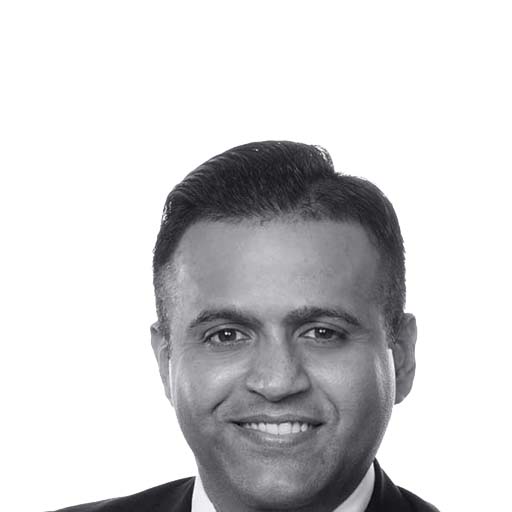
[00:00:55] Speaker C: Joining me now is Nathan Thomas, senior Vice president of Product Management at Oracle Cloud Infrastructure, more commonly known as oci. And today we're discussing Inside Oracle's multi cloud strategy. So Nathan, thanks for joining me and welcome.
[00:01:09] Speaker A: Thank you for having me, Chris. It's great to be here.
[00:01:11] Speaker C: Okay, so Nathan, I actually interviewed a fair few of the OCI sort of folks and I've interviewed a number of the founding partners of oci. So you know, I really want to talk about the history first and foremost and one thing that's really comes up in my mind is historically Oracle has been very Oracle first and I know this from working with Oracle historically over the years, especially on the database side, but now it's sort of multi cloud. That's obviously changed. So I really want to walk through the history. What goes on in your mind when I ask you that question?
[00:01:43] Speaker A: Yeah, there's a lot of different angles there. I think when you look back at the history of Oracle as a database, of course I think we've always had an open approach around platforms, for example, you know, so making sure we support a wide range of hardware around operating systems systems, making sure we support that a lot of interfaces and engagement with other applications so that the data can be used. So we've kind of got this history of having, you know, kind of that mentality. I think that there is a perception as reality challenge sometimes, you know, where I think, you know, folks can have a different opinion of that in practice. And I think part of, you know, the reason that happened with OCI and the Oracle database was we had really high standards around expectations of the hardware that it was going to run on, the performance characteristics and we really wanted to have it to be exited a hardware and get that incredible performance capability in OCI in an environment we knew had the right networking and all of those things added up to saying okay, for the time being when we launched, you could really run Oracle database on exadata hardware in OCI as the first approach. And so sort of that engineering approach I think wound up leading to some sense that somehow we were trying to curtail, you know, usage across other environments. But you know, that was clearly a motivating factor that then led us down this road of multicloud to say well wait a minute, like we've obviously got to solve that. And it was a big and heavy lift with a lot of time involved to get over that hump, but here we are.
[00:03:01] Speaker C: And so do you think just quickly on that as well? And you know that, you know, history has obviously written what you're sort of doing today, but what about sort of as well what you're seeing in the current marketplace. So a lot of people that I'm speaking to, Nathan, like yourself and others that I'm running interviews on the show, like it does seem like the dynamic shifting again. So can you share any insight then on that, what you're seeing with other customers perhaps?
[00:03:25] Speaker A: Yeah. So to me the customer segment is very clear that they're operating in a multi cloud environment. I think across, across everybody we talk to that they've got multiple cloud vendors, multiple applications that are spanning clouds in some cases. I think that the expectation is changing in that reality. We've moved from this world where people accept, hey, it's a segmented walled garden and the only interfaces between the different clouds is public APIs and I can open up network ports to hey, I really expect that I'm going to be able to build a multi cloud cross functional service, be able to transact in that service as a single deal, expect that it's going to have longevity. So it's not going to be something that goes away when one cloud or another changes its mind about it. And so they're really looking at a unified world in cloud that I think is very different than where we were 10 years ago in the history of cloud.
[00:04:17] Speaker C: So the operative word that you mentioned there is expectations. So I want to talk about that a little bit more. So last week I was on an interview with the president, large global vendor and basically he was sort of talking about, you know, with customers. Now they are expecting a lot more from vendors, generally speaking, why GDPR or there's a lot more regulation, a lot more scrutiny, geopolitics, et cetera. What are you sort of seeing from customers, perhaps even on the product side around expectation. And like the other thing is, is nay, that everyone wants to do more with less. All those sort of things. Right, so what sort of goes on then, now that we are moving towards all the things I just rattled off, like, what are you sort of hearing again from customers now?
[00:05:00] Speaker A: I think you're 100% correct. I think the sort of dichotomy people had in the past, that there were enterprise companies and then there were startups and never the twain shall meet, it's kind of gone. I think the regulatory expectations, customer privacy expectations, a wide range of kind of normal behaviors have meant that it doesn't matter how small you are or how you know what customer base you have, you've got to deal with all of those factors, data from top to bottom. And it really means that in, you know, a vendor like Oracle, who's got that long history of having built those kinds of solutions that really do meet all of those requirements and yet are now accessible, you know, in a cloud consumption model across all the different CSPs, is well positioned, you know, to really support those customers. You know, those customers particularly looking at, you know, a wide range of AI initiatives right now and say, well, wait a minute, I got to worry about governance inside of that in a way that's really compliant in all of the different geographies and the sovereignty requirements that I've got. And I've got locality across the globe for those things. And this kind of solution really fits well with saying, okay, you can enable those AI workloads you want to go build today, but do it with controlled governance where you can get support for, you know, down to row level security inside of the Oracle AI database. It's, I think customers are hugely demanding at the moment and I think not every vendor in the data AI platform space is really positioned to fully meet those needs.
[00:06:22] Speaker C: And you mentioned sovereignty and you know, it's interesting. So I'm an Australian and there was sort of a point in time everyone's talking about sovereignty, et cetera, and then it sort of dropped off. Definitely made a resurgent then on the sovereignty piece. So are you hearing that a lot as well? I'm also hearing that across the Europe region as well. So do you have any sort of insight then on that? Because it's sort of like one of those things that everyone talks about it for a while and then it drops off. But then again, it's come back on the scene too.
[00:06:52] Speaker A: Yeah, we absolutely are hearing it. I just got back from Oracle AI World in London and it was a very Constant topic there. We hear it in Europe, but we hear it across the globe and markets everywhere.
And this feels like a very big groundswell that I think has momentum that is going to be persistent. So to your point about coming and going, I feel like this is not going to be a wave that that ebbs in this case. You know, from the Oracle perspective, we do feel like we've got really interesting and compelling product in this space. On the one hand, of course we have multi cloud, you know, which means we support 72 either live or plan regions across all our CSP partners. That means if you need to be data residents local in a particular location with a particular csp, we've got a strong story there. Of course we've got 200 plus total CI regions, but we also have a whole bunch of really awesome sovereign solutions and particularly our Dedicated Region and Alloy products which let you take all 200 plus web services from Oracle and run them on as little as three racks inside of a data center. We also have sovereign solutions like the EU sovereign cloud launched in Frankfurt Madrid. So we're really trying to meet customers with either, hey, put it your own data center as a private solution, build a white label solution with Alloy and build a sovereign cloud that you can operate with local staff or use one of the sovereign regions that we've launched so that you can meet those compliance requirements.
[00:08:12] Speaker C: And Nathan, given your experience in the space, would you say that that's something that is going to be more of a dominant trend? Perhaps. I know we discussed before it was sort of on the scene, off the scene, back on the scene. It's here to stay on the scene. But do you think that this is going to be sort of the main thing as we move forward throughout 2026?
[00:08:31] Speaker A: I think this is going to be a major factor for 2026 and beyond. We certainly are hearing it from customers. You know, there is this, I think, clarity that it's not something that they can just sidestep or put a little bit of effort into window dressing around and we have customers that are doing it. I mean you look at somebody like nri, Fujitsu out of Japan, they're both building for, you know, a segment of financial and government markets to meet sovereign data requirements, to meet local operation requirements using Distributed Region as well as Alloy. And you know, I think that segment usage maturing and turning into a pattern that's followable. I think it's very different than the way we were just a few years ago. I think you looked at a few years ago when you Had a choice around. I can really accept a very limited private cloud, you know, kind of reality when I looked at the options from other CSPs that, you know, said, hey, it's going to be very expensive, it's going to be very limited in the features it offers, it's going to be very limited on scalability, you know, or I could go try and build my own private cloud from scratch and I could, you know, endure this massive amount of investment to get to that point.
Now I think there are with Alloy and drcc, much better real world solutions and we've got customers up and running to a pretty large degree. You've got folks in Thailand, you've got folks in New Zealand, you've got folks in Italy. There are sovereign cloud solutions getting built everywhere now.
[00:09:54] Speaker C: Yeah. So Nathan, I was doing a bit of reconnaissance on yourself before the interview and I really want to talk about a recent interview that you did that I watched and you mentioned that the demand for multi cloud was there due to customer demand which was accelerated by AI. So walk me through sort of demand life cycle.
[00:10:15] Speaker A: Absolutely. So you know, if you look at Oracle's customer base, we obviously have a huge number of customers running with massive amounts of data inside of Oracle databases, a lot of times their most mission critical data sets and those same customers are looking at this massive value opportunity that AI represents, you know, where there's business acceleration, application development acceleration, all kinds of efficiencies to be gained by moving to it. And they want to take advantage of the data in their Oracle databases to go fuel that AI value, you know, the revolution that it can drive to get there. You know, what they're looking at is they've built pipelines inside of our CSP partners in a lot of cases. So they built something on top of Gemini or they built something with Bedrock on AWS or they built something with Copilot, with Azure. They want to apply the value of that data that's in those Oracle databases into that pipeline. And so it makes great sense for them to be able to say let me take that on prem or cloud based database and move it into that environment where I get that high performance exit hardware. I can do the, you know, the consumption models that I expect in the cloud. It's fully integrated into those clouds, you know, as a first party service with auth identity and networking access and using the same API sets and then easily plug it into those AI pipelines. So it's a bit of a virtuous circle, you know, where they get that value coming out, you know, as well as the ability to go and do the integration.
[00:11:42] Speaker C: So from memory, you said as well, Nathan, in the interview would be if AI, and I know AI has been around for a while, etc. I understand that. But you sort of saying if it wasn't for the big push, perhaps we wouldn't be in the sort of space we're in at the moment. Would you still agree with that statement? I know it was a recent interview, but like, I know things change day to day.
[00:12:03] Speaker A: Well, you know, I certainly think that there is momentum as well for data center exits and cloud modernization and application modernization happening independently. So obviously the cloud migrations were happening as a thing prior to AI existing as a thing. But I think it is absolutely the case that customers recognize that their ability to go build and replicate the AI capabilities, particularly on Prem, is going to be more limited than some of the other things they could have worked around in the past. So they may have had workloads that were on premises and they just sort of accepted that and they said, look, I can run my app tier, I can run the other pieces I need around the database on PREM for low latency access and network capabilities. But with AI, they're saying, you know, wait a minute, am I going to go stand up, you know, a GB200 or B200 water cool data center environment so I can actually have all the inferencing power that I need? Or is it really more realistic to say I'm going to move that workload on the database side into the cloud where I can get access to those services in a way that I don't have to built in and maintain the global data center infrastructure for my AI inference pipeline. And it's a pretty obvious choice for them, I think.
[00:13:16] Speaker C: So, Nathan, there's these phrases that people keep saying like bring AI to your data, bring AI here, et cetera. You say that people are starting to understand the benefits of leveraging AI in the cloud. And I know that sounds like a really rudimentary question, but I'm just, I'm seeing it just a lot more transformative conversations on the show. But when I'm out in the field doing the conferences, et cetera, I really want to get your view.
[00:13:42] Speaker A: Yeah. And I hate to give you an answer that is, you know, hey, there's, there's lots of answers. But I will say that there's some of both, right. Which is obviously, if you look at our Oracle AI database, we've done a lot of work to build some of the capabilities into the Database itself. So that is that we do vectorization and embedding directly into the database to simplify integration with AI tools both on prem and in the cloud. We do have the gentic capabilities built into the database for frankly, on prem use cases where customers want to be directly engaging in agent development for on prem databases. And that is I think, a set of customers who, for latency or compliance or security reasons, dec, that's the way that they would prefer to go. But I do think that the customers who are looking to take advantage of advanced AI capabilities and don't want to have to replicate all of that infrastructure on the inference side in particular inside of their own data centers absolutely are saying I've got to do that in the cloud and it's going to be a lower barrier to entry for me versus the capital expenditure and all of the effort that's going to go into building out those capabilities locally. And again, I think there's an innovation and pace of update value that happens in the cloud, which has been the case before AI that I think is maybe doubly so in AI where there's just a constant drumbeat of update and innovation that again is I think tougher to match. You know, on prem I will say I would be risk. Not to mention when I say on prem, you know, a lot of the context that we're talking about, I'm really referring to, you know, in, in data centers running their own infrastructure and running their own hardware and running their own, you know, kind of networking and control plane. Obviously we consider distributed region running inside of a customer's data center as a cloud option, even though that is in their own data center. So in some parlances would still be on prem. But that brings that same cloud value proposition down into the data center for the customers who say, hey, I really want to be on prem with my data for whatever reason.
[00:15:37] Speaker C: So to get a bit of a sense check, given your role and you are speaking to customers at the coal face, what do you sort of think really at the end of the day that they are really looking for? So is it the AIP is the big thing? Is it about cost optimization, is about, you know, workloads? Like what, what is it would you say, like generally speaking, so I can just gauge like where the market's at?
[00:16:00] Speaker A: Certainly it's a blend. I think we, we have a significant chunk of customers who are definitely moving, you know, cloud modernization and data center exit. And what I'll say is kind of going back to where I, where we started the conversation you know, it took us quite a while to really get to a solution that we were super satisfied with in the cloud environments. I think if you look at Oracle running in the cloud, we've been in partnerships with AWS and with Azure and running inside of virtual machines for many years, for a decade plus. But we have always recognized that that was not the solution that Exadata can really provide. Right all the way down to the hardware layer and again having the networking environment that we expect.
And so with the shift that we have in the multi cloud, suddenly we really feel like we've unblocked a set of workloads that customers now recognize, hey, that's the same exited I'm running on prem with the high performance that Oracle is committed to and Oracle is saying is there and stands behind. And so there's definitely a set of workloads that have been sitting on premises that had not been moved to the cloud and had their application tier modernized for operating in the cloud that now can do that.
And so we do see that set of demand coming in for sure. I'll also say you can use these services, the Oracle database, Azure at Google and at aws in most cases, you know, they're purchasable through the marketplaces on those CSPs and we see people coming in and just launching them independently as well. So net new database workloads are getting launched again, presumably in part aligned to kind of AI workloads, but a wide range of use cases. I think there's customers coming in who are not just saying hey, I've got a legacy database and I need to migrate that into the cloud. So it's going to be, you know, a range of use cases and AI is a constant topic. I think on top of all of them, you know, as much as it is a specific motivator for a single case.
[00:17:55] Speaker C: Okay, so before we move on, I want to ask a question around.
You said it took us some time to get to the solution. Now I from memory when I interviewed some of your founding partners of oci, they gave me your version but I want to hear yours on what was going on.
Why would you say it took some time? Walk me through like this is going through the history of OCR that people who perhaps aren't aware of these things.
[00:18:19] Speaker A: So you know, the time here in a lot of ways actually comes down to our partners in the CSP space.
As you know, for my background, I've worked at Amazon and worked at Google as well. And this idea of hey, we're going to have exited a hardware landing in our data centers, in our cloud data centers. You know, for Google, Azure and AWS is a very different mentality than they're used to. And so the time kind of went into we've got to go establish commercial relationships to make that happen. We've got to go build the working model to make that happen. And then candidly, with 72 Libra planned regions, it's landing all of that hardware globally and setting up the networks. It was just a huge amount of lift to get to the point where we were able to sustain and support, support it, you know, on a bunch of different fronts. So you know, I think if you go back far enough there, there may not have been, you know, the right set of relationships, there may not have been the right set of kind of understandings of the maturity of the multi cloud part of customers expectations in market, maybe to get it over the line. Then even when there was commitment to doing it, it was a massive lift to get to that point.
[00:19:26] Speaker C: Okay, I want to take a slight 2 millimeter shift now. I'm really curious from your perspective Nathan, to understand as we know, you know, you've partnered with, you know, Microsoft or Azure more specifically and friends, so how hard is it really to cooperate with companies that you're also competing with. And I know that actually comes from people out there in the market when I sort of ask and crowdsource information as well before conducting these interviews.
[00:19:53] Speaker A: Yeah, as you, as I mentioned ago, obviously I've worked at a few of these environments and so it's not, you know, anyone in particular, I think that causes any particular friction versus any of the other ones. I think like anything this comes down to relationships and so putting in the really high effort level to go build the right relationships with the right people, you know, in terms of, I think initially decision makers around the going after the business, but then it's working with the engineering teams to do the integration, it's working with the field teams on the sales side to go out and meet with customers and understand how this is going to work in practice and then make sure they're going to succeed with it. It's working with the marketing teams to make sure we're going out with joint messaging. That makes sense. So putting in that hard work I think really kind of overcomes some of that fear. You know, I think when you look at these customers, they get that they need to operate in this multi cloud world. But the cloud vendors I think historically had built these walled gardens and it's always a Little fearful to say I'm going to remove what might be perceived as a protectionist element of a business and instead rely on our strength as a cloud vendor. Whether it's Azure or AWS or Google, they've all got unique and interesting capabilities with unique web services and I think different approaches to market. And I think we're showing so far that those kind of database customers who move on to multi cloud are not using that as an opportunity to somehow sidestep those values. In fact, what we see is that they're increasing consumption across all of those cloud vendors. And so to a degree, I think there was a point in time, you know, kind of trepidation around that. But we've now established the contractual relationships, the commercial relationships, built the patterns and know how to do it. And so I think it's opening up not just for us, but you know, you see things like AWS and their new interconnect agreements they're doing with Google. I think we've shown a pattern for the industry that's going to be a real win for customers.
[00:21:49] Speaker C: Enterprise tech leaders know that compliance isn't just about ticking boxes. It's about risk, reputation and revenue. That's why companies trust Vanta to streamline their security and compliance workflows at scale with deep integrations and automated evidence collection. VANTA takes the manual audit grunt work out of the frameworks like ISO 27001 SOC2 and GDPR. Visit vanta.com kbcast V-A-T a.com kbcast to learn more.
Would you say collectively at OCI, the consensus would be it's not a zero sum game. So what I mean from that is like okay, Azure win some doesn't mean Oracle loses some for example, because the whole multi cloud sort of approach. Whereas if I look at other vendors perhaps that are operating the point solution space it 100 comes from, well, if that vendor wins, we lose sort of thing. But obviously what I'm hearing from what you're saying throughout the course of the interview, that's more of the general approach.
[00:22:53] Speaker A: Yeah, I think 100%. We feel like we have lots of opportunity to go and compete in market across a range of services. All the CSPs do for the customer workloads and customers absolutely are growing, particularly right now in an AI sense and there's plenty of market opportunity for everybody. So again I think there can be trepidation and as you're saying, people get protectionists but you know, we're trying to break through that barrier and I think We've seen that like we see real support from these CSPs and I will say they have a history of working with other software vendors. I think maybe not to such a kind of integrated degree as we've gone to with multi cloud, you know, with the sites, with the physical hardware and the kind of integration we've done on the console to make it a really high quality first party experience. But it's something that I think is not quite as distant, you know, for them as it would have been if you go back, you know, 10 years ago. And so do my cloud transfer.
[00:23:47] Speaker C: So Oracle was. I was at a conference last year, it was in Australia actually, and I interviewed one of your local spokespeople and one of the things that we discussed was around the vendor lock in portability that Oracle offers. I want to talk to you a little bit more about that because I do think it's something. So when I was in Australia recently for work, I was talking to someone, they referenced a vendor, no, it wasn't Oracle. And then they were saying how much that it was infuriating a lot of customers about the lock in stuff. And I think this is important and it's important because it's more competitive now than ever and if people can get it faster, cheaper, better, they're going to leave. But now, from my understanding, and you can talk through more on this, Nathan, than I can, but the portability is a thing.
So would you say, given current climate, what cut the expectations, everything we talked about, security, governance, you know, regulation, are we going to start to see more shifts in the marketplace as well as less loyalty perhaps to a specific vendor? Because it's like, well, my needs have changed, et cetera. I know it's a bit of a big question, but I had so many things on my mind and I do think this is an important area that I want to cover.
[00:24:54] Speaker A: Look, the customers are highly empowered to make shifts to different technology, you know, and it is a market where as a vendor in the cloud space and in the data space, you have to be proving your value every single day. You absolutely cannot rely on the idea that the migration is too difficult or customers that get locked in in some tier. Then I think particularly in a world where vibe coding and other AI driven tooling is making it simpler every day, you really can't rely on that. You have to go out and be supporting that customer with a high quality product that provides incredible stability, incredible security and incredible innovation and value day in and day out. And of course we have a huge base of customers on Oracle who I think with their feet, you know, every day and decide to stick with it or net new customers who onboard and use it, you know, and if we weren't providing that value, you know, I think really to make that even more pointed, if we weren't taking the database into our CSP partners and meeting our customers where they need it, you know, near the AI pipelines and the other applications are building in low latency connectivity to those databases, we absolutely would face the risk that they migrated out. And so it's, you know, absolutely incumbent upon us to keep providing that value day in and day out and making sure we're delivering the best product.
[00:26:10] Speaker C: And then so with the value piece, and I know that's, you know, everyone's like, you know, what value? And then people are expecting more. What about like cost optimization? I know we sort of touched on it a little bit, but obviously people are, you know, like I mentioned before, wanting more with less.
How does that piece sort of fit into what we're talking about today?
[00:26:28] Speaker A: Yeah, we absolutely hear customers focus on this very deeply. You know, it's a continual topic I think for any technology vendor, you know, they need to be adding that value.
I think we look at it in two ways. One is with this database, this is oftentimes the core of customers business. And so there's this very clear sense that, okay, the product is enabling me to do transactions that run my business, maybe oltp. You know, again, if I'm plugging into AI pipelines now, I'm getting additional net new value on top of that. And so that value proposition in terms of having the reliable high performance database that they need for the workload is kind of number one on the efficiency on the back end of it. Of course they would all like that to be as low cost as possible. So we do a lot of work to make sure that stays a reality. You know, I think inside of these CSP environments we have done a lot of work to integrate with a lot of their commercial approaches. One of the coolest things I think we've done in that regard is multi cloud universal credits. So we are letting customers make Single commits to OCI and then use those across the CSPs. That really gives them, you know, I think a more centralized pool of management of commitment. That means there's less risk for them of forfeiture of commitment across segmented use cases in different clouds. And it means that they get a certain amount of additional negotiating leverage. And so we certainly think about not just the technology being Part of the efficiency story, but making sure that we're giving the commercial mechanisms to the customers so that they have the right purchasing approaches and simplify that side of their life as well.
[00:28:02] Speaker C: And when you say negotiating power and then do you mean because of the credits?
[00:28:07] Speaker A: Well, what I mean is simply that they have, rather than negotiating four smaller deals, they are negotiating one larger deal in the sense that, you know, traditionally these customers wind up having separate agreements with each of the CSPs for their purchases, you know, for the database tier. And so this means they've got a single one through oci. And so that is a, you know, typically a larger commitment, you know, and then that gives them more control over that commit in an aggregate level. You know, I think the worst case scenario for these customers in a lot of cases is they go and make commits to individual CSPs and then for whatever reason not being able to use them and then forfeiting that is less likely to happen at an aggregated commit level where you can spend in so many different ways across the different CSPs.
[00:28:53] Speaker C: I want to talk about roadmap as well. So given obviously an SVP of product management, like how important this is for you in your day to day role. Because again, like there's been times in my experience, like vendors, we're going to do all this stuff and then you just never hear from it ever again. So again, it's sort of like kind of planning, like a false narrative. So I'm keen to really understand because this is important too for customers, given everything that's going on in this space, this is important for them as well to know that folks like Oracle are moving in the same direction.
[00:29:24] Speaker A: If you look at oci, we have a fairly narrow focus. You know, when you look at the differentiating value that we're trying to drive, we're really trying to hit on core infrastructure services. We're trying to hit very heavily on sovereign solutions, we're trying to hit very heavily on multi cloud solutions. And then of course in the AI and data tier and our, you know, kind of applications and database components as well as our AI enablement pieces. It keeps us focused. And if I look at that infraplay in particular, you know, I think we've got a very focused set of services. I know it sounds like a lot to say we've got 200 web services, you know, for OCI, but that is way smaller than a bunch of other CSPs. And frankly, I think a lot of CSPs have built a Whole suite of niche, unprofitable web services that have to be cared for and fed and have a roadmap and go and built and maintained and then frankly subsidized by, you know, the money coming out of the other services that they've been at the core infra layer, we've kept a relatively narrow focus saying these are the set of services that matter for our big pillars of innovation and make sure that we go and drive an aggressive and sustainable roadmap that we can communicate about and be trustworthy about that we're actually going to deliver on what we said we're going to deliver on.
[00:30:41] Speaker C: So would you say because of your narrow focus, it's attributed to the success, et cetera? Because you've probably seen other vendors in the past, not necessarily hyperscalers or whatever, but other vendors sort of during this feature bloat. You started off at this and then all of a sudden they're doing all these things.
Like sometimes I look at the space and I think so many people are doing the exact same thing. It's really hard to differentiate now. So you think because of that just staying in your lane, that has caused sort of the outcome as well?
[00:31:13] Speaker A: Yeah, this is huge. And it's interesting because, you know, I came out from outside of OCI having worked with other hyperscalers and I came in and I genuinely almost didn't believe we were so much cheaper than some of the other hyperscalers for core infrastructure services.
And the innovation seemed very high. The features and capabilities were high. It was, you know, certainly high, high performance all but it was feature rich and yet so much cheaper. And as I dug in and began to understand kind of the ethos and the way that product was approached, this was this core component which was look, we're going to focus on core infra and we're going to on focus, focus on making ourselves drive down the cost structure behind this thing aggressively and relentlessly. We are going to go build the highest performance, lowest cost cloud that is secure everywhere. And that mantra over a 10 year period has really led to this kind of gen 2 cloud mentality that has this focus with less total web service count. But driving that innovation, things like our bare metal focus where we say look, there's a huge tax that comes from virtualization, like we'd rather nail the bare metal solution, get the virtualization elements off of the box so customers can get, you know, 20, 30% cost savings, you know, on those core compute services which frankly are the biggest chunk of their bill in a lot of cases across all the hyperscalers and just be relentless about that kind of mentality rather than hey, innovation through launching a thousand web services.
[00:32:43] Speaker C: Okay, so this is interesting. I want to get into this a little bit more. So hang on a second. So you're saying that when I know that you've got a background hyperscalers, I did notice that you moved across and you're like we're doing this stuff so much cheaper than all these other players.
But no one's. When I say no one, I'm generalizing here. People haven't really acknowledged that. Now what would you attribute it to? Because do you think originally speaking people just thought well Oracle database, that's where people they, they associated with that. They weren't thinking like you know, cloud sort of environment, what you guys are doing now, et cetera. So do you think it was perhaps branding, marketing? I know that sounds like a bit of a scapegoat answer, but where does your mind go? Because I think this is really interesting answer.
[00:33:28] Speaker A: Yeah, I think there was a momentum around database and the brand of Oracle that certainly made people make some assumptions about what we were doing and certainly we went out of our way to make sure that Oracle as a workload and a database worked really well in our cloud. And again maybe that read enforce that message but I think that the reality was we really built, you know what we consider a second generation cloud from the ground up focused on supporting a wide range of compute workloads, you know, a wide range of storage workloads with incredible networking. Obviously, you know, RDMA enabled multi tenant network that supported a database workload. But now it turns out is phenomenal for GPU to GPU node communication. And that outcome of all of that kind of focused effort is now, now we're building the world's largest AI super clusters. But it's not, that's net new for us. You know, that's a set of workloads I think that recognized, hey, we're at such a scale that that cost advantage, the value advantage that OCI represents is something I have to take advantage of. There's no way that I can, you know, not plug in something this large into those level of cost savings. And we found that across the board and not just in the GPU space, and not just in the AI space, but our largest customers are using bare metal. Our largest customers are taking advantage of our low cost block storage and object storage options. They're using our high performance networking and I think they're getting a lot of value out of it. Again, at those large fleet sizes, it really starts to be almost unavoidable. You have to go OCI so that you get those cost savings.
[00:35:02] Speaker C: So I want to switch gears for a moment and talk through perhaps customers drowning in migration complexity sort of stuff, for example, as you would clearly know. But how does sort of multi cloud actually simplify that versus just adding on another layer on top and be more confused? It's more expensive than at the end of the month.
I think this is a really important piece because again, it seems, it seems easy when you're talking about it, you know, you're the senior guy. But when someone else is, you know, out here doing this stuff and maybe this isn't their main sort of thing day to day, it does create complexity for these customers.
[00:35:38] Speaker A: Well, I'll say if you look at a customer who is running an Oracle database on premises today, running on exit at a hardware and they want to cloud enable that, so they want to move into a cloud environment, let's say, you know, not really considering VRCC or our XSCC on prem cloud, but would actually move into a public cloud. They typically already are going to have some relationship with an existing cloud, you know, with Azure, with aws, with Google or with oci. And if you think about, okay, they've got the database, they want to get it into the cloud where they're going to build their applications and there's a migration cost to going and doing that, pretty much everything you could think of other than multi cloud is going to be a higher and more painful migration threshold.
So if they're going to move it to a totally different database and they're going to take that hit, that's going to be a pretty big, you know, lift. If they're going to shift to another database service in the cloud, if they're going to go run it on a different set of hardware but keep it on Oracle and run it in a virtual machine, that's going to require a lot of different constraints, you know, in shifts from where they are today. If they're going to go, you know, stand it up inside of the native compute, all of those other options wind up being, I think tougher for them to go get that advantage. The easiest possible path is hey, we run this thing in the exact same hardware that you're already running on prem and now it runs inside of the cloud where you were already operating. It just is the easy button I think relative to all other choices.
[00:37:02] Speaker C: And would you say as well, and you know that you mentioned before like other cloud Providers, do you think? Sometimes like not bad habits but like maybe they did something from a previous sort of live and they're bringing in here so they bring across those like bad habits sort of thing. How do you, how do people sort of get past that mindset then with, and you said before, like doing the whole lift and shift completely is like super expensive and like, I don't know whether I'm assuming people have done that, but you're obviously saying it's better to do the multi cloud approach, but it's just more so the mindset, the mentality there as well behind that.
[00:37:35] Speaker A: Yeah, I think you're right. Like there's definitely some elements where customers are accepting that they're kind of taking some things that were not ideal and replicating them in another environment and they're still not ideal. There's an engineering purity that you'd like to solve all of those things all in one fell swoop and you know, have a lovely, no engineering debt to carry around of a thing. The reality is for a lot of these enterprises it's more about mitigating the risk of downtime or the risk of anything that would occur, you know, to negatively affect their business. And so, you know, if you can do a like, for like, you know, lift and shift migration and not have to have those risks, then that's probably the better outcome to focus on. You know, to give you a very concrete example, one of the places we see this with people migrating into multi cloud a lot is networking. You know, so they simply want to lift and shift, shift the CIDR blocks and all of the information around their networking configuration into those cloud environments rather than go refactor everything in a way that might make a little bit more sense for a native cloud application. But we support that and it's fine. We get that. An existing set of network infrastructure and topology that they already know how to operate in and it's one less thing to worry about and what's already a little challenging kind of process for them and then the expectation is you get into that environment and then yeah, you can modernize and clean up. Because now you're in the cloud, you've got, you know, kind of all the time in the world to then go and, you know, apply all the different tools you have in that cloud environment to go and modernize, you know, to
[00:39:03] Speaker C: the latest spec you mentioned before downtime. So that's something I'm hearing a lot as well. Like people are super panicked about kind of downtime.
Number of reasons, yes. Regulatory, yes. This penalties Customers, you know, straight away people aren't as patient as they were, but a lot of interdependency as well, downstream impacts, supply chains, et cetera. So would you say it's a big focus now for customers as well?
[00:39:29] Speaker A: Well, certainly for Oracle it is like that is one of the big motivating factors I think for Multicloud, you know, when you look at our database, the real application cluster or Rack has been one of the big foundational technologies enabling, you know, large scale, high, high uptime and high available solutions for databases. And that is not really supported in cloud other than through multi cloud, you know, on exited hardware. And so it's absolutely a regular topic for us. That's what kind of motivates customers along with a bunch of other technologies, the ZRCB and some of our zero downtime solutions that really unblock that set of customers. There's no question like our customer set is that set of customers who cares deeply about uptime. Their banks, their financial institutions, their major enterprises, their people running utilities, they're you know, major Internet companies.
And when they go down, people notice. And so the database is core to that.
[00:40:26] Speaker C: And you know what's interesting about this, like even a few years ago like things would go down, people a lot more like forgiving. Now it's like straight away someone's on X, someone's complaining like straight away.
So do you think that those it's going to get more aggressive in terms of that? Because like I'm not saying anything but it's just more so.
Sometimes things do fail which we don't want it to.
But look, it happens. But I'm just seeing it a lot from people and I'm not trying to say like it's acceptable or I'm trying to condone the behavior. It's just more, I am seeing it across customers and people that I'm speaking to saying like this cannot be a thing anymore. Just, it just can't happen or else people just go elsewhere. Their customers, like people aren't loyal, as I mentioned before, that'll just go elsewhere. They're not going to wait. I think someone said 24 days until someone gets back up and running. Like no one's doing that.
[00:41:17] Speaker A: Yeah, 100%. I think the clouds in general have, I think matured dramatically over the last more than a decade. And the expectation is that it's recovery oriented computing. I think we've done a lot to do segmentation across clouds. That mean blast radius has been reduced significantly.
I think that there is an absolute maniacal focus on this and not everybody's equal, you know, I think, you know, we feel very strongly about the, you know, track record that we built with OCI in this regard and we feel very strongly about having built a, I think very cost efficient but very highly reliable topology for the cloud and the way that we architect it for oci. But then of course with multicloud, we're operating inside of these CSP environments, you know, and so we see all of it top to bottom and you know, we definitely have, you know, high expectations from customers and I think that's totally reasonable. I think that they should expect that those products and services continue to run day in and day out and it'll cause them to add business settings.
[00:42:16] Speaker C: And so Nathan, lastly, what do you sort of think now moving forward? I know we're sort of early ish into 2026, but keen to hear sort of your thoughts or what's going on your mind. What can we start to see unfold for the rest of the year?
[00:42:28] Speaker A: Well, I'll say for the multi cloud space with Oracle, you will continue to see us pushing hard on AI capabilities. You know, AI integration stories. We really see our customers asking for this. You know, of course you'll continue to see us expand regions, you'll continue to see us expand the databases. We just launched the autonomous database dedicated in Azure last week. We just launched the London region last week for aws. And so that drumbeat will continue for sure. But Mick, no doubt about it, you'll keep hearing about sovereign AI, you know, all day long as well.
[00:43:03] Speaker C: And Nathan, what would you like to leave our audience with really quickly? Any final thoughts, closing comments just to round out today's interview?
[00:43:10] Speaker A: Well, a couple of things. You know, one is obviously, you know, on the multi cloud side, you know, it's up and open for business. And so, you know, if customers do have a particular interest around the database side, you know, they're certainly invited to get in touch with their Oracle sales reps on that side. But I'll say more broadly, you know, I push everybody to hold their cloud vendors accountable for enabling multi cloud solutions. You know, this expectation should be, yeah, I'm going to be running in multiple clouds. I'm going to want services that span those clouds. I'm going to want commercial models that let me buy, you know, a single commitment across those clouds. I'm going to want the expectation that the product characteristics, performance, availability, longevity, over time a product all assume that it's going to be operating across multiple, multiple clouds. And you know, I'm going to have the portability that I need for data, you know, I think both commercially and technologically. Like keep holding those vendors accountable, you know, OCI included.
[00:44:09] Speaker B: This is KBCast, the voice of Cyber.
[00:44:13] Speaker C: Thanks for tuning in. For more industry leading news and thought provoking articles, visit KBI Media to get
[00:44:20] Speaker B: access to this episode is brought to you by MercSec. Your smarter route to security talent Mr. Executive search has helped enterprise organizations find the right people from around the world since 2012. Their on demand talent acquisition team helps startups and mid sized businesses scale faster and more efficiently. Find out
[email protected] today.