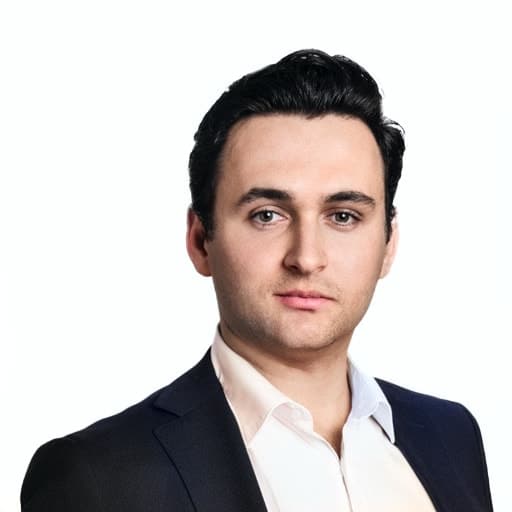
[00:00:00] Speaker A: I would say Orcus is the right strategic framework, but frameworks don't build capability. Capital builds capability. Until we can match our capital architecture to our strategic ambition, we're really writing checks we can't cash.
[00:00:17] Speaker B: This is kvcas.
[00:00:18] Speaker A: I'll be completely silent.
[00:00:20] Speaker C: As a primary target for ransomware campaigns,
[00:00:22] Speaker A: as security and testing and performance, risk and compliance, and we can actually automate
[00:00:27] Speaker C: that, take that data and use it.
Joining back on the show is James Tennant, partner head of JPAC at Bocker Capital. And today we're discussing why Orcus needs sovereign capital. So, James, welcome back.
[00:00:42] Speaker A: Thanks for having me, kb. It's great to be back.
[00:00:44] Speaker C: Okay, so I really want to start, perhaps James, with your thoughts on why you believe Orcas needs sovereign capital. Let's start there.
[00:00:54] Speaker A: So Aukus does have sovereign capital, just to be clear, under each of their own respective countries. So AU is Australia, UK is UK obviously, in the US is US. That makes ORCAs. So ORCAs is a $368 billion bet on Allied industry capacity. We've not built what I'd call the capital architecture to win that bet just yet.
[00:01:16] Speaker C: Okay, so when you say capital architecture, what do you mean by that? Because, I mean, that's. That's not chump change. 368 billion.
[00:01:23] Speaker A: Yeah. So, I mean, that money goes into projects when they're sort of pledged. What? The problem that I'm sort of starting to try and portray is that that money has to go into sort of vehicles to start deliberating it and putting it into the right places.
So, like Pillar one of Orcus gets all of the headlines. That's nuclear submarines, Osborne shipyard, Virginia class purchases.
Pillar two is the strategic edge, which is sort of what everyone's talking about at the moment. And that includes quantum AI, hypersonics, undersea autonomy. But it's Pillar two, really, that has the capital problem that no one's talking about.
[00:02:01] Speaker C: Honestly, that's interesting because going back to headlines, so many people seem rattled by Pillar one, and we don't want this. I mean, that's a separate issue. But why do you think that's gotten majority of the headlines versus Pillar two? Because sometimes when I'm talking about Pillar two, people seem to be confused that I'm talking about Pillar one.
So where do you think the confusion is? Why do you think Pillar one got a little bit more media attention? Obviously you're on this podcast. It's a little bit different. This is a little bit more nuanced. This, the work that I do. But I'm just curious to Understand why that's the case because what you're saying does make a lot more sense in terms of what people out there are doing and why this needs more attention.
[00:02:37] Speaker A: Yeah, it's a really good question, I think. Look, you know me well enough, I try not to hold back my punches. But essentially this whole Orcas auspice was built under the submarines getting built and you know, Australia had to pony up a lot of the money for that. So pillar one really has almost all of the spending as the rationale for even creating Orcas. And pillar two sort of started off as an afterthought really. It was intentional, but it didn't feel intentional at the time. And you could see that in the news headlines. It's just, it's almost never mentioned. You know, it's always about submarines and we're going to get them and is there a delay and the shipyards aren't producing enough. I think that's why you see such a difference between the attention between pillar one and two.
I would make a few points though. So I mean if you think about other countries, there's a huge amount of asymmetry. So China's military civil fusion guidance, they have a fund of US$73 billion. They're not commercial venture funds, they're state directed capital with a single purpose and that's really to fund that in between civilian innovation and military capability.
And that's where this Aukus auspice isn't working properly. So combined Orcas has partners that have these sort of mechanisms. So the US has in Q Tel, which is quite famously the CIA's venture fund, they now have this Office of Strategic Capital, there's nsif, the National Security Strategic Investment Fund in the uk and now we have ASCA here in Australia. And all of those put together total about $5.68 billion.
So I mean there's a 13 to 1 difference in just China versus orcas in capital mobilization for the thematics I mentioned prior.
[00:04:23] Speaker C: So before we go down a little bit more, I just want to focus on Orcas for a moment. So obviously people who don't know it's Australia, uk, us, how do these three countries, given what's happening today, how do they sort of align? Right, because so much other things are going on. Perhaps it's like, well, how do people stay true to the mission around orc that because it's hard enough trying to coordinate people in our own country, let alone countries overseas and in different time zones. And how does that sort of work together as more of a unified front, would you say?
[00:04:53] Speaker A: So from a defense and intelligence standpoint, the three countries have been working together, you know, time immemorial. The issue is that the Orcus funding, or the reason for it, is all about this defense technology getting up to speed quickly. So you're right. Like, there's obviously going to be time zone changes, there's going to be a delineation of who gets what capital. I mean, I think I said on the podcast last time, not all good, not all capability is good capability and therefore shouldn't be funded. And so it's just interesting that we always seem to rely on our US friends, like, especially within the venture capital game. Like, if you can make it in Australia, you can make it in the us. If you can't get funding in Australia, you go to the us.
The UK is kind of a hybrid in between.
So, I mean, I suppose my whole point that I'm trying to make is Orcas needs a unified sovereign capital. So the sovereign being between the three countries, orchestrated by one place. And that's really because there's a huge amount of strategic competition, as sort of alluded to before. And at its core, we have a capital allocation problem. Like I mentioned, people going to the US not enough capital here in Australia. Yeah, different needs.
So I would say we're currently allocating capital as if we're not in a competition, but I would say our adversaries are not making that same mistake.
[00:06:10] Speaker C: So when you say we're not allocating capital as if we're not in a competition, do you mean competition with China and friends?
[00:06:15] Speaker A: I just mean general sort of war, if you will. I mean, you can see the state of the world at the moment. It's not in a particularly good place. But the people that are acting in those wars are innovating, they're getting a huge amount of defense funding. Venture capital is interested in them. It's time to sort of open our eyes and start moving because, you know, the rest of the world is okay.
[00:06:35] Speaker C: So what I'm curious to know then, given, you know, these are Western countries, right? Like, we've got really smart people in all of these countries, right? So why do you think we're sort of like, lagging behind, perhaps, and we can't sort of get on the same page and we've got other people perhaps that are overtaking or potentially going to overtake in terms of power and military operation and things like that? Like, why would you say we are
[00:06:59] Speaker A: at this position systematically? The way that companies grow in each three of those countries, they all suffer this thing called the Valley of Death. Now, I almost hesitate to bring it up on your podcast because if you listen to any venture podcast or any private equity podcast, everyone speaks about the Valley of Death. But let me just give you a very quick overview of it. Valley of Death is basically the funding gap between prototyping production. A company demonstrates technology that works, right? And then defense says we're interested, and then nothing will really happen for three to five years while the company bleeds all of its cash out waiting for that procurement decision. Now that is the biggest problem with defense tech. The sales cycles are really long. It's very hard to get your first contract. There's a huge amount of compliance and regulatory burden that you have to go through.
So that's where, I guess that's what you'd call the Valley of death for those companies, because the companies die there. The government doesn't have like a balance sheet or a burn rate that they have to really consider. I mean, they do on a country level, but when it comes to investing or doing procurement, they don't really have to, but a company does, right? Like they can just continue to drain the bank accounts while they wait for the counterparty I the government to transact with them. And so I think what we're seeing is really that the capital structure of defense procurement is not really compatible with the capital structure of technology startups.
[00:08:22] Speaker C: So what I've heard in Australia, obviously I'm Australian, living in the US now, but there's these people out there got a really good capability, like you said, procurement, et cetera. They don't have seven years of financial records. When you're a startup, of course you don't. That's a pretty long tenure for a startup to have those. And then so therefore they get overlooked and then they, the Valley of death, they die out. They go to the U.S. they go elsewhere, as we have. You talked about what I'm seeing in the private space and maybe you can make some correlation in the government defense space would be because of artificial intelligence. Now, businesses know they need to make the decisions faster because if they don't, their competitor is going to overtake. So they're not going to sit around a table for 12 months and look at risk assessments. There obviously is going to be risk in every single thing that you do. But now they're like, well, we've got to make a decision fast or, or else we could be overturned. We're seeing businesses going bankrupt right across the world. Whether that for financial reasons maybe, but also just a Little bit behind, a little bit outdated than a competitor who comes from literally nowhere and overpowers them. So do you think that mindset that we're seeing in the private sector is now going to be transferred into the public sector? We can't really wait around to be like, well, let's see what this company does in seven years. We don't really have seven years like we used to anymore. It's a little bit more. That luxury position is, is really dissolving.
[00:09:40] Speaker A: Yeah, I mean, that's exactly why companies die in that valley of death. Right. I won't try and make the analogy of the triangle being faster, better or cheaper, but essentially that's what you have to compete with, like incoming competitors into your space. Right. So I mean, if you were asking why are so many companies dying in that sort of valley of death reason, I would say there's three reasons. One's procurement temperature, very hard to get your first sale doesn't even have to be government. We just call that the sales cycle. And then risk allocation. And then more particularly for defense companies, it's that ESG constraint which is environmental, social and governance, which I'm more happy to dig into as well.
[00:10:19] Speaker C: So you said something before, there needs to be one place that orchestrates all this capital. So when you say that, do you mean like on US soil, Australian soil, or is it like a virtual sort of hub where it's like we've got representatives from each of these countries that are then allocating this capital then throughout these three nations? Or what does that look like in your eyes? Or what sort of comes up in your mind when I ask you that question?
[00:10:40] Speaker A: So the concept itself has sort of been proven by NATO, which I can't remember the amount of countries that are in it, but it's. Almost every NATO participant has funded a NATO investment fund, accurately known as the nif.
What I would sort of propose that is that we would have something similar, call it the ORCA Sovereign Capital Fund or something. And what I would propose is a framework for coordinating the capital mobilization across those three countries. So the concept would recognize that no single partner can address the gap alone, but together we would have sufficient scale. And I mean the numbers that we're talking about are much less than our near peer competitors. I mean for real scale to be able to execute on pillar two priorities, I think we would need about $10 billion over a 10 year life cycle as well. What I would say is that NATO delineated between lots of different countries and yet seemed to make it work amongst all those countries. So we would try and take a framework similar to theirs.
[00:11:39] Speaker C: And why do you think we haven't done that yet? Or is this in the process as we speak?
[00:11:43] Speaker A: It's not worth me lying to you and saying I do. There's a few things that are happening that look like they're going in the right direction. So Australia and the UK are seen as sovereign supply chain according to the NDAA National Defense Authorizations act in. In the us, which is a huge step forwards because it makes the countries look like they're domestic production companies in the us, which is a huge deal.
Equally, we have some information transfer arrangements when it comes to like, itar and which is the international trafficking of arms regulation, which sounds quite hectic, but it's actually not. They are the ones that look at sort of how data moves, what should be secured. It's a big sort of compliance hurdle to get over. I think the other reason that we haven't got it together or that's sort of starting to come together is that, like I mentioned before, Pillar one was really the name of the game. I think pillar two is really just starting to sort of find its feet. You remember, each of these countries have like first assistant secretaries and heads of orcus.
So pillar two needs to be taken more seriously.
[00:12:46] Speaker C: And from your experience, given your background, how can it be taken more seriously? Or like, what can be done? Are we doing enough? Do you think it'll get there on its own?
Or do we need some of these, you know, big wigs to come in and actually say, look, we really need to get this happening or else we could be in a position where we start to fall behind quite significantly as a group.
[00:13:06] Speaker A: I think for it to be taken seriously. I mean, the three ministers and secretaries, heads of State for defense within Australia, UK and us, they meet quite regular basis. I would suggest that they make an announcement, making an announcement on this sort of framework. The other thing would be to actually put rubber to the road and put dollars into a fund that would fund these orcas, Pillar two opportunities. Rather than relying on each country to maybe take an interest, if they do take an interest, then potentially get some funding somewhere. But where that comes from, nobody knows yet. So really just putting the framework, putting the actual rubber to the road in terms of like a fund structure being wound up, each country pledging or committing dollars into that commingled fund, and then people actually making pitches and getting invested into. I mean, that's really the only way that you can see it being serious. And, you know, you have to remember there are pathways forwards and framework forwards within the government to allow these things to happen. I mean there are public private partnerships that happen. You could even start leveraging capital out of the pension funds and the superannuation funds. Same thing, supers in Australia.
And the Australian superannuation fund world has like $3.5 trillion in it. Why aren't we leveraging that for our own national security?
And like I mentioned before, ESG has become a problem, but it's slowly starting to move down. So having government push their pension and superannuation funds into probably quasi government venture style run business is really that rubber to the road to make it work.
[00:14:41] Speaker C: Okay, all right, this is interesting. So that's a lot of money considering the size of Australia in terms of population that's just sitting there.
Why haven't they reallocated that capital that's effectively sitting there? And I know like, look, obviously that self managed super fund, you've got other reasons and people do things and they invest it elsewhere, but there's still money probably just sitting around.
Why haven't they done that?
[00:15:02] Speaker A: Would you say this money is actually managed by professional superannuation funds? That doesn't even take into account the self managed super fund world. So think of your host plus your Australian supers, rest, et cetera. And I would say most of that money gets managed quite actively. So it's in the property markets international, they invest into funds, they just don't invest into defense funds because of the ESG constraints.
So the reason it's not happening is because if you think about it from a macro standpoint, the Super Funds act on behalf of the members of the Australian public and optically it doesn't look good or the American or the UK public and optically it doesn't look good to invest into defense. And when people think defense, they think guns and bombs and bullets. But that's not always what it is. A lot of national resilience sort of comes under that defense orchestra comes under that defense umbrella as well.
So I think an education piece for the public would be incredibly beneficial to explain that not all defence technology is is offensive. A lot of it is defensive. It helps secure our national resilience. Think about things like the Critical Infrastructure Act. A lot of investment needs to go into actually enacting that and then actually allowing these mandates to drop and not be punished for doing so. So there may even have to be like some sort of government financial stock back by the treasury to be able to secure that. So if the members left, then the Superannuation fund wouldn't be penalized for that.
[00:16:31] Speaker C: Okay, this is interesting. So you said before, hypothetically, if they invested it, it doesn't look good to like the public. Right? The everyday Australian. I'm curious. And maybe it's dumb question, like, why does that matter so much? I mean, there's heaps of things the government does, which is dumb. Right. But it's like, well, we've just got to deal with it. But this is to better our defense for our country, which is a big country surrounded by water, which makes it, you know, quite. It makes it in some cases more difficult.
Just to give an example, why does that matter?
[00:16:59] Speaker A: Well, sadly, the answer is that the businesses that run our pension fund money are business like they need more members to join them so that they can have more of the superannuation wallets that they have put into their, into their fund structure so they can deliver bigger and better returns. But you have to remember, every dollar that you give to these guys, typically they get half a percent a year just for operating costs. And these funds are massive, like hundreds of billions of dollars.
So they don't want to mess with the member base because if they mess with the member base and they leave, effectively there's a capital outflow from those funds. So it's not a, it's not an awesome answer, but the real answer is it's a financial decision.
[00:17:41] Speaker C: Okay, I get that. And that makes sense. So can't the government intervene? I mean, they intervene in the other things, but it's like if we don't do, if we got all this potentially that we're allocating into property and all the things that you discuss, which we could be allocating into our military and our defense and all these sort of things. Yes, again, it's not bombs and all these sort of things. I know people think that straight away in guns, but the downfall is we may not have a resilient country moving forward.
So what happens now?
[00:18:12] Speaker A: Good question. So there's a few things that the government can do to answer that question. First, so I would put them into three categories, say authority, incentive, and architecture. What is the government authorized to do? What is private capital incentivized to do?
And what do institutional structures exist in their sort of execution?
So we've touched on the private capital. What are they incentivized to do? So think about those super funds. They're incentivized to grow bigger. We just need to think about that sort of stuff. So first the government, I mean, we could have export control, harmonization, ORCAS does have some work streams around this, but it needs acceleration. So what do I mean by that? I mean we need to allow for our ORCAS partners, so for Australia, that's the UK and the US to be able to invest here frictionlessly. There we are. And the reason for that, the reason that we would allow them to do that is because we have huge tax incentives as Australian funds to invest into early stage businesses under something called the esvclp. Early Stage Limited, Early Stage Venture Capital Limited Partnership, which gets tax breaks to Australian funds to invest into early stage companies. But the international companies that are investing here don't have that. So I would actually suggest the government could do some sort of trilateral tax arrangement for investing into defense technology within those three countries.
So that's where I'd probably start.
[00:19:38] Speaker C: Do you think that's going to be hard to sort of pull off though? Because I mean the rate that things are going, just generally speaking, things take a while.
Is this a realistic goal though?
[00:19:47] Speaker A: I think there's a framework for it. I mean Turnbull administration did the ESBCLP work. There are double tax treaties around the world. So there's a pathway forwards. I would suggest or encourage diplomats to consider thinking about something like this as well. It would allow for a lot more cross border investment and also allow for a lot more expansion. The more money that goes into companies that comes from a different country allows them to go over there and actually sort of enact more sales and put out more product.
And within the military they always use this word interoperability. And so being able to have military capability that has been funded and used across the three nations is incredibly useful for any particular any future war scenario.
[00:20:36] Speaker C: Selling SaaS to Enterprise. You'll be asked about your security credentials sooner or later, likely before the contract's even signed. Vanta helps SaaS teams prove their compliance and frameworks like ISO 27001 and SoC2 without losing months to manual prep. Visit vanta.com kbcast that's v-a n t a.com forward/kbcast to learn more.
The other part I want to look into is the ESG stuff. So I've spoken about this on the show in the past. It sort of died down. Now it's sort of coming back to the surface again.
Walk me through the issues that are going on there in your eyes.
[00:21:18] Speaker A: My personal opinion, I certainly think it has a place, but I think it's been misconstrued, especially around defense. I mean my argument would be what could be more ESG than your own national resilience and having the security of being safe in your own place. And I mean that's very much on the S side of the ESG social. So ESG mandates I believe would probably have locked up as much as 80% of the institutional capital out there for defense investment entirely. Now, that's a huge number, but the reason it's that big is that you got to think superannuation funds, sovereign wealth funds and insurance companies, they all have mandates that don't include defence.
[00:22:01] Speaker C: Right. Okay, so do you, going back to the public perception side of things, do you think that is factored into it again, perhaps?
[00:22:10] Speaker A: Yes, I would, absolutely. We've created these policy vehicles that can't invest in the capabilities that we need. And this is not an argument against esg. It's just an observation that ESG frameworks were not designed for strategic competition. They all treat defense equally. They just don't distinguish between controversial weapons and the enabling technologies that underpin all of our allied capability. So I mean there's oftentimes if like say a cyber company is working with our signals directorate, one of our spy agencies, then they could also be considered a defense business, even if they're a securing SCADA networks which do things like mining. And it's securing a lot more than just government. But they will get bucketed into that bucket.
[00:22:57] Speaker C: And that's perhaps where people feel that they're being misled, for example, even though technically it's not what they think it is.
[00:23:07] Speaker A: I would just say I think people just don't understand it.
I'll go back to the point I made before.
There really has to be a bit more education on offensive weaponry, defensive capability and this dual use notion. I'm not sure if we mentioned dual use before, but the dual use is a term that people use for both a company that can work in the commercial sector and the defense and intelligence sector that could be like an agricultural drone, be able to be used for intelligence, surveillance and reconnaissance. A lot of people just don't understand that concept and notion. I think there needs to be more education around it and sadly I think it could only be really government led.
[00:23:46] Speaker C: Just staying on ESG for a moment, do you think as well when Pillar one got a little bit more it's its airtime back in the day there was a lot of backlash from that. People rattled, couldn't handle it. Is the ban idea. Whether you agree or disagree, it doesn't even matter about that. But what I'm really interested in here is, is perhaps maybe as well there's a bit of spillover from the backlash around the ESG side of things, of pillar one that's now spilling into pillar two. Would you agree with that?
[00:24:13] Speaker A: I think the biggest controversy was that pillar one started off on the wrong footing and this wasn't around an ESG problem. It was really that agreement we'd made with the French. We'd obviously gone back on that agreement, cost the taxpayers a lot of money to rip up that agreement and we move to this orcus auspice where we may not actually get capability in our hands until much later than with the previous one. And the public was outraged, and rightfully so. And I just think that the whole idea really kick off in the most positive light.
I think now that enough time has passed, it seems to be getting a lot more traction. I think public perception of this Orcus agreement is relatively positive.
I think we will start seeing more happening in pillar 2 on the basis that public sentiment is going up around it as well.
[00:25:02] Speaker C: So now I want to look at what other countries are doing and get your sort of thoughts. So you mentioned Inkitel, which is the US and then Israel's Yozma. What's going on here? And sort of what are we learning or what are you learning that you can share with us?
[00:25:15] Speaker A: Yeah, I mean, In Qitel is a great case study, very cool business, great people that work amongst, you know, our orcus nations. So for those that don't know, the CIA's venture capital arm is called in Qtel. It was created around 1999, I think. Surely you should know that. I think I work with a few guys that started it. Essentially what happened was the intelligence community needed some commercial technology, but couldn't access it through their traditional procurement networks. There's three things that really make In Q Tel work. One is its operational independence. It's a not for profit business, so it's not a government agency per se, it's just government sponsored. And it has its own board, its own investment committee, its own deal team. The CIA will set the strategic priorities and thematics that they can invest into. But In Q Tel executes those autonomously. And so the government doesn't have a say in the actual end investment, which is something I would want to take for this Aska T or Aukas Fund.
It really needs to be run like a commercial entity, that directives are set by government rather than a government entity trying to act as a commercial entity.
So yeah, the second thing that I would say about In QTEL is that basically it's there to solve Intelligence community problems and that's all it's there to do. So there's no ambiguity about its purpose. The focus enables a really rapid decision making and really clear accountability. Again something that you would need to sort of put it back into that orcus fund framework.
And then I mean there's probably an element of luck here, but the results really speak for themselves. So some of the companies that in Q Tel backed very early on was like Palantir, Keyhole. Keyhole is now Google Earth for those that don't know and like dozens and dozens of others that are unicorns now.
So they're not just financial returns, they're actually like good capability that the US intelligence community literally right now relies on. And they were the genesis of that. And then very similarly Yozma. So Yozma is an Israeli program launched in 1993, but it's a different model, but it's equally sort of instrumental.
So they had a technology base, this them being Israel, but they didn't really have a venture capital industry at the time, very burgeoning one. Now the government ceded 10 different venture funds with $100 million and required a one for one investment from co investors and other foreign VC participation. The government took a downside protection but offered upside protection to its private partners. So essentially the government backstopped any investment that they made into sort of this venture capital ecosystem. And then the government exited its positions of profits. They really stoked the private sector.
And today Israel has more NASDAQ listed companies than any other country other than the US itself. So it just goes to show that government funds pointed in the right direction, managed in the right way, managed by the right people, with a very clear mission, can both have great outcomes for industry, for defense and intelligence, and essentially have a good economic return for the government itself and not be a further drag on the taxpayers.
[00:28:19] Speaker C: Okay, this is interesting. So going back to ask a T for a moment, one thing I've heard in the industry in Australia, so the private sector is people complaining to say, you know, the government had this thing, but then they either outsourced it to a company that perhaps isn't managed, managing it correctly. So to your earlier point, the other thing I've also heard is sometimes when you know, if these things are heavily managed by government, people would challenge have you done it before? So for example, I'm an entrepreneur, I'm not probably going to listen to someone who's never run a business before because it's like, well, you haven't really walked a second in my shoes sort of thing. That's just an example. So what that draws parallel to is perhaps people that are thinking, well, why should we really listen to you? And you've never really done it, or it gets mismanaged or they outsource it to someone to be like, oh look, they've got this big capability.
Then people complain to say they're only trying to, you know, feed themselves, not worry about giving it to the others. I've heard this a lot over the last 10, 12, almost 15 years of people saying the same sort of thing.
Do you think that this, these sort of problems I'm discussing with you are still rampant in Australia? Perhaps, and that's why it gets people offside. They feel like it's the same players that get the contracts, it's the same people, they get rid of the government, you know, thing where they manage everything and all of those sort of things that you would have heard yourself. It's just, how do we move beyond that? Therefore we're not sort of doing the same thing as before and getting the same result.
[00:29:48] Speaker A: Just taking a step back for a second. If you think about the entire Australian sort of ecosystem, I think we really do suffer from a tall poppy syndrome sort of community or I guess, sort of environment, Australians in particular. And so I think, you know, when we do these interviews, I try to think very hard on, okay, well, it's very easy to complain about these things. So what are the outcomes that we need to get after?
And so, you know, I'm trying to think of frameworks, I'm trying to think of ways that, you know, government could incentivize people to invest, trying to think of ways that it can fall down. But all of those things inherently have some sort of risk attached. So if the question is, would this get messy? Like, would the idea of an Orcas fund get messy? The answer is going to be yes, and it's going to be messy for a few different reasons. One is the governance complexity itself is going to be immense.
So three sovereign governments, all with different legal systems, although Australia and the UK are both on Commonwealth law, different peculiar cultures. So each of the countries have a different way of getting the military and defense wares, intelligence wares that they require, and different political cycles, you know, four year at a different time to the US and the uk all trying to make joint decisions. It's a really hard thing. So you have to have, find that overlap where you can strike hard and strike fast, have it signed and put it together quickly. And so just from like a, just from like a Systems engineering standpoint, like it's just very difficult to have all those things lined up and humming. Orcus has already navigated harder problems like nuclear propulsion, technology transfer, that would have been incredibly difficult. So in the like there's a pathway forwards and in the scheme of things it's doable, it's just difficult. And then the other thing I'd mention is IP and technology transfer. So who would own the technology developed under this Orcus arrangement? I'm not really sure how that would work. How is it transferred across borders again, is it just open transfer? And how would that work? And what happens when one partner wants to export and the others don't want to export it to other countries that maybe one country is friendly with and the other country isn't? So it's like a huge amount of work has to go into it. But in saying that it is very much doable.
[00:32:07] Speaker C: So going back to people complaining, do you think people complaining for valid reasons. And I asked this because like I said, sometimes the government gets all this money, then they'll allocate it to maybe quite a large player who probably doesn't need to do that. Maybe they should separate the work and say, hey, we'll give you a piece and you a piece. That way it looks fair. Because I think I've seen like you said, these poor companies in this valley of death that they just, they're just dying all over. So it's like we need to actually yes, I understand it's less risk if we give it to a big firm who may or may not have done it well before, who knows. But I understand the sentiments. But perhaps that's what's getting people offside. They're probably lacking innovation, then it can be bothered. It's all too hard. So do you think that people are saying that though? Because that is the reality of what is happening in Australia.
[00:32:56] Speaker A: Look, it's not just Australia. It's all countries that have a robust government.
There's always going to be problems with it.
Again, to be somewhat controversial, I think the era of the big four consulting taking these massive defense contracts and underperforming are starting to slow down or probably starting to err on not happening anymore. There's some pretty public blow ups around that space where government has ripped up contracts for underperformance or non completion.
So I think there's going to be a change.
There was a big chat about doing more sovereign, more sovereign contracting, so putting more money in the hands of Australian business owners.
But then the trade off is are they more Expensive than our international counterparts. And so how do you weigh that up? So look, the short answer is there's a lot of change. It's very hard to blame one particular place.
But I'll be honest, some of the complaining is very much valid.
[00:33:51] Speaker C: And then what about, and I don't know what your thoughts are on this. What I have been seeing, even with like just government, like taxpayers dollars, one thing I see online when I'm doing research for interviews is just people complaining about, oh well, my tax money goes there.
What about, for example, for Ask A T, is there some sort of transparency around like capital, like allocation or like who got what, Therefore it's like, hey, you may be complaining but you don't need to because here hasn't, hey, here's how much this company or whatever the thing is, there's something like that in place and if there isn't, should there be? And if there is, do you think that would limit some of this complaining and a little bit of, you know, arguing going on between people?
[00:34:32] Speaker A: The short answer is there's a framework for that. I mean if you look at Oztenders believe the Commonwealth procurement laws or anything above 150k has to go out to tender. And so when they go out to tender, anyone is allowed to apply for those and then the tenderer has to be independent in their contracting decision to be able to give it to the right person for best value for money. That is a government mandate. So that's a very well trodden path.
The problem arises that who are the people that are applying and is the tender specifically made for them? So while it might be out to the public, are they actually able to bid on that thing? If I asked you, I can only hire people called Chris and Breen. Well, that doesn't really leave the market open to be able to attend it for that project. Right. And so it is a good step, it's a good thing, transparency is good.
And being able to show, if you go onto the website, essentially you can see everything that's been awarded, who it was awarded to, at what stage is the milestones at? I think if you log in you may even be able to see what their application said.
So that I think from an Australian standpoint is an awesome thing. But where the complaints come from is who, who is the person releasing it and is it insider? Are they the only sole source person going for it or you know, is the price correct?
[00:36:00] Speaker C: Yes, and that's the part, and I have heard of that before, sometimes it's a little bit Rigmarolled. It's not super easy to be like, oh, here's a list of everything. Sometimes you sort of have to trawl through things to get the answers.
But do you think to your point, perhaps the requirements, it's like, well, that's a little, little hard. And perhaps it's disqualified like 80% of people because they don't have people called Chris O' Brien in their company. And that only really leaves one person or one company. So there's that. And then the other thing would be, do you think as well, the pricing stuff? Because we've often heard, oh, who approved that pricing? I could have done it for cheaper. You've heard that a lot out there which may be valid. I'm just curious, I mean, you're the guy working in this space. So I'm just curious to see, would that alleviate some of the contention that's building in Australia?
[00:36:49] Speaker A: We revert back to what I sort of said before. There certainly can be more opacity. The process is certainly not perfect. I mean the Austenders platform is very difficult to use and oftentimes the request to tender for things is super compliance and regulatory like heavy. Take you weeks just to fill out the paperwork.
So things can certainly be better on that front. I would sort of refer back to again to what I was mentioning about what is like a defense company. It really comes down to education. I mean, people love to complain, there's no doubt about that. Without being educated in the thing you're complaining about, you're just going to be wrong. So I mean, probably the procurement heads of different government agencies should be telling people more or trying to be more transparent in their marketing, perhaps.
[00:37:35] Speaker C: And so lastly, what do you think sort of moving forward, how do you sort of summarize what we discussed? We discussed a lot of terrain today, but I'm just curious now we're sort of in the early stages of 2026. What do you think's going to happen now?
[00:37:46] Speaker A: We are in a strategic competition that I believe in part will be decided by capital allocation. And that's what I'm. That's what I'm passionate about. That's what I'm doing my PhD in. That's what I'm really interested in because I think it's an overlooked sort of domain of warfare, if you will. I think our adversaries understand that. I don't think we have quite got there and you can see that because they've built institutional architecture to mobilize capital at real scale and speed and we haven't and that's why we've been talking about this ASKA T. And just a reminder for those listening, ASKA T is the acronym that we're normally using for an Aukus style fund.
So I would say ORCAS is the right strategic framework. But frameworks don't build capability.
Capital builds capability. Until we can match our capital architecture to our strategic ambition, we're really writing checks we can't cash.
So the last thing I'd probably leave you with is that I think the good news is the resources exist so we're not just mining in a place that has no oil. Australia has a $3.5 trillion superannuation pool. The UK and the US have super deep capital markets and private sector expertise exists. So we have all those pieces that we can put together to make this thing happen. My personal belief is what is missing is the transmission mechanism, so that institutional architecture that connects the capital to the capability at its speed. And that's really the important thing. That's what we're sort of naming as ASCA T. And then I would say we need to move from strategic announcement to real capital deployment. So a lot of pillar two announcements, not much rubber on the road.
So I think the window for shaping this transition is now. I am optimistic that Australia can take a lead here, but optimism with that action is just wishful thinking.
[00:39:36] Speaker B: This is KBCast, the voice of Cyber.
[00:39:40] Speaker C: Thanks for tuning in. For more industry leading news and thought provoking articles, visit KBI Media to get access to this today.
[00:39:48] Speaker B: This episode is brought to you by MercSec. Your smarter route to Security Talent Mercse Executive Search has helped enterprise organizations find the right people from around the world since 2012. Their on demand Talent acquisition team helps startups and midsized businesses scale faster and more efficiently.
Find out
[email protected] today.